
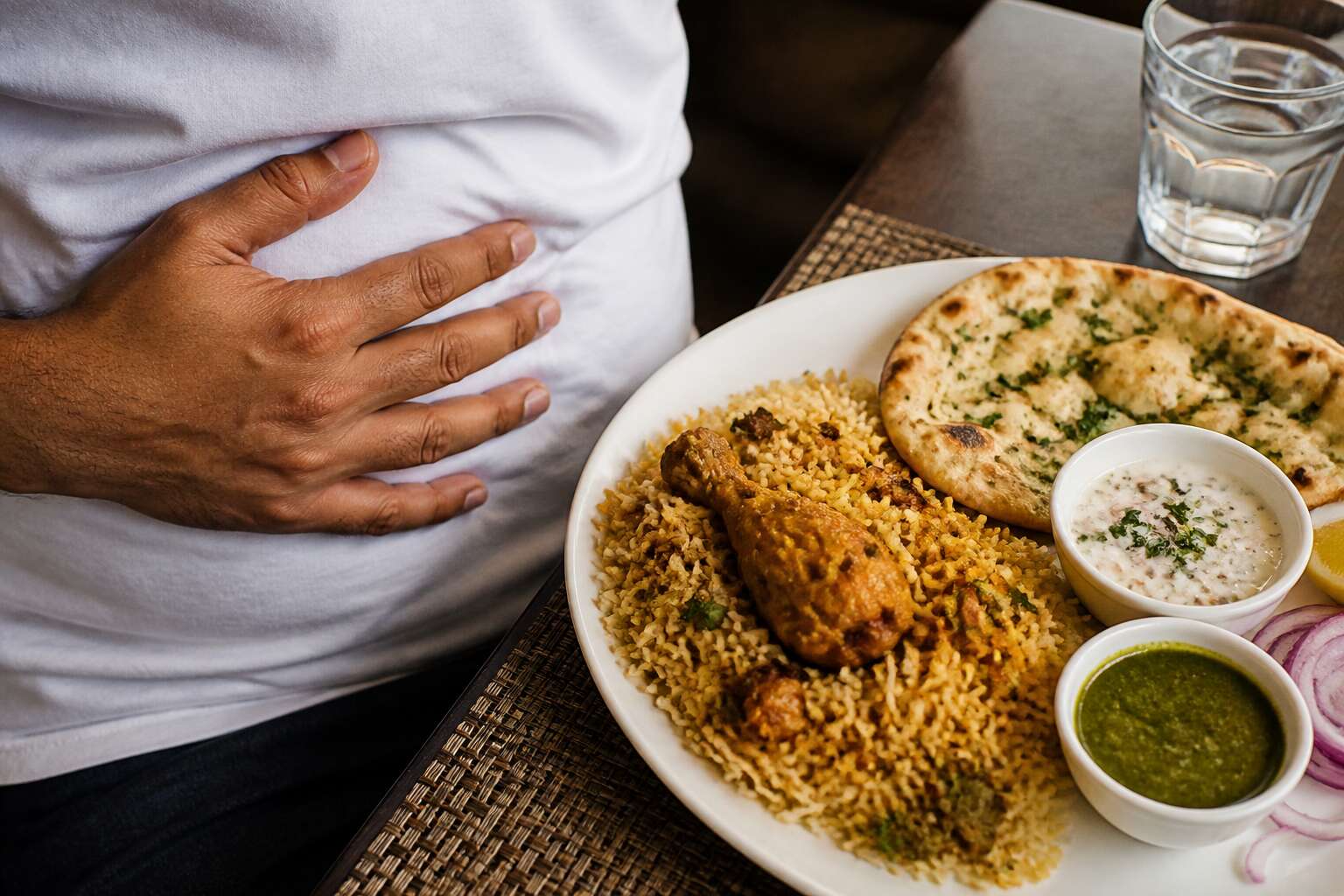
Why Spicy Cuisine Triggers Digestive Distress
Capsaicin and the Stomach Lining
Pure capsaicin measures a staggering 16 million Scoville units. When it lands in the stomach, this alkaloid binds to TRPV1 receptors on sensory nerves, tricking the gut into sensing a thermal burn. The stomach responds by dilating blood vessels, overproducing gastric acid, and stripping away the protective mucus layer. That cascade of irritation is exactly what we mean when we talk about indian food upset stomach.
For most of us, the first bite is pure pleasure. The follow up is pure regret.
- Acid hypersecretion irritates the gastric mucosa
- Delayed gastric emptying causes bloating and cramping
- Existing ulcers are aggravated by the inflammatory response
Genetics dictate your tolerance. Some people lack the receptor density to register intense pain, while others, including many who love a fiery Durban curry, are wired for an immediate, unhappy response to chilli heat. The gut always remembers its limits.
The Role of High-Fat Ingredients
Spicy cuisine rarely travels alone. It arrives with ghee, cream, and oil, the holy trinity of indulgence. The fat content does more than coat the palate. It slows gastric emptying, which means the chilli-laden meal sits in the stomach longer than it should. That extended residence amplifies every irritant.
Take a butter chicken or a lamb biryani crowned with fried onions. The heat and the heavy oils demand simultaneous processing, a tall order for any gut.
- Fat triggers cholecystokinin, a hormone that delays stomach emptying.
- Oily masalas relax the lower oesophageal sphincter, inviting acid reflux.
- Cream and yoghurt buffer the spice but ferment slowly, producing gas.
For anyone prone to indian food upset stomach, the real culprit is often this pairing. Capsaicin opens the door, and clarified butter pushes you through it.
Complex Spice Blends and Enzyme Overload
Complex spice blends are where the real trouble begins. Cumin, coriander, turmeric, and cardamom each trigger a separate enzymatic pathway. The pancreas releases its stores, but ten spices at once creates a demand that outpaces supply. This overload leaves partially digested particles in the small intestine. I have watched many people blame indian food upset stomach on chilli alone.
Actually, the blend forces the gut to multitask beyond its capacity. Each spice carries an essential oil or resin that must be broken down individually. The body prioritises certain compounds and lets others wait. A predictable chain reaction follows:
- Enzyme output peaks early.
- Unprocessed spice residue remains.
- Bacterial fermentation, not spice heat, causes the cramping.
When that residue reaches the colon, indian food upset stomach becomes a common evening complaint. The enzyme system simply lacks the capacity for such aromatic complexity!
Common Culprits in a Traditional Curry
Chilies and Heat Sensitivities
Some diners tolerate fiery curries with remarkable ease, while others feel the burn long after the meal ends. This discrepancy often stems from individual heat sensitivities, a physiological quirk shaped by genetics and tolerance. A traditional curry may feature bird’s eye chilies, which pack a formidable punch, in a single simmering pot. If your palate is unaccustomed to their intensity, indian food upset stomach becomes almost inevitable.
Consider how the heat travels through the dish. It coats the proteins, seeps into the gravy, and lingers on the tongue. For those with a low threshold, even a modest amount of cayenne or fresh green chili triggers discomfort. In South African homes, where curries happily blend local and Indian traditions, the spice level can vary wildly!
- Start with a milder curry to gauge your reaction
- Request chilies on the side if dining out
The vulnerability is personal, not universal. Understanding your comfort zone prevents that familiar regret.
Garlic and Onion Fermentation
Onions and garlic are foundational in most curry bases, yet they are the quiet culprits behind many stomach complaints. These alliums carry fructans, short carbohydrate chains that the human small intestine cannot absorb. The undigested material moves into the colon, where bacteria ferment it rapidly. That fermentation releases gas and draws water into the bowel, which produces bloating and cramping within an hour of eating.
In my experience, the reaction is dose dependent. A light scattering of onion is harmless, but a proper South African curry base, where onions are softened into a thick paste and garlic is added by the spoonful, delivers a heavy load. For anyone with fructan sensitivity, this is a reliable trigger. The discomfort does not come from spice or oil. It comes from the very ingredients that make the dish smell so good. For these eaters, indian food upset stomach is not a mystery, it is a predictable chemical response.
Heavy Cream and Ghee Content
Many a curry’s crowning glory, the final swirl of cream, is actually a gastrointestinal time bomb for the lactose intolerant. That velvety richness comes from lactose, a disaccharide requiring the enzyme lactase for breakdown. When that enzyme is missing, the undigested sugar heads straight to the colon, where it ferments and produces significant water and gas. My own digestive system treats a heavy cream sauce with the same enthusiasm I reserve for a Monday morning. Meanwhile, ghee, while clarified and free of milk solids, still contains trace amounts of casein and lactose, enough to trigger a response in the highly sensitive. For them, the indian food upset stomach is a repeated, predictable consequence of dairy’s dual assault. It is a rich and creamy ride to discomfort.
Undercooked Legumes and Starches
Undercooked legumes are a common problem in traditional curry preparation. Chickpeas and kidney beans contain complex oligosaccharides such as raffinose and stachyose. Human intestines lack the enzyme to break these bonds. The undigested carbohydrates reach the colon and ferment, producing cramping and bloating.
Starches behave similarly. Potatoes and rice that have not fully gelatinized present resistant starch to the gut. Bacteria feed on that starch, and the resulting indian food upset stomach resembles the discomfort of eating raw dough. This is not about spice or dairy, it is about timing.
Common culprits:
- Chickpeas that remain firm in chana masala
- Kidney beans simmered too briefly
- Potato chunks with a raw crunch
Immediate Soothing Techniques After a Heavy Meal
Hydration Strategies That Actually Help
The first sip of water after a rich curry often feels like relief. It is not. Gulping fluids dilutes gastric juices and slows digestion, leaving you heavier. Sip warm water instead. The heat encourages peristalsis, moving the meal through your system.
Hydration is a strategy, not a reflex. A simple electrolyte solution, with a pinch of salt and sugar, restores balance quickly. Coconut water is a superior choice. It contains natural potassium, which calms cramping. Avoid cold beverages, they shock the stomach during active breakdown.
A short, deliberate walk can ease the feeling of pressure. Do not lie down. Gravity is an ally right now, and your abdomen needs time to process the dense meal.
To rehydrate effectively, consider these options:
– Warm ginger tea, which is anti-inflammatory.
– Plain buttermilk, which contains live cultures.
– A homemade oral rehydration solution.
These techniques provide a buffer against the worst of an indian food upset stomach, preventing the evening from becoming a painful lesson.
Digestive Herbs and Teas to Calm the Gut
An indian food upset stomach makes you want to collapse into a heap. Resist. Sit upright with a straight spine. This posture takes pressure off your stomach’s entrance, letting trapped gas escape. Breathe low into your belly. This activates the vagus nerveand helps the gut calm down without medication. You will notice a difference in minutes.
Once the immediate panic fades, turn to digestive herbs. Fennel seeds deserve a permanent spot in your pocket. Chew a pinch and the volatile oils calm cramping while freshening your breath. Cardamom pods also shine; crush one into hot water for a fragrant antidote to heaviness. Mint leaves, bruised and steeped briefly, relax the intestinal musclesand cut nausea.
- Fennel seeds, either chewed or brewed into tea
- Cardamom pods, crushed and steeped
- Fresh mint, bruised for a quick infusion
These immediate moves have rescued me from more indian food upset stomach episodes than I can count. They cost nothing, require no pharmacy run, and work within ten minutes.
Gentle Posture and Movement Tips
After a heavy curry, the immediate instinct is to collapse. Resist that urge. Slumping compresses the stomach and locks in pressure. Sit upright with a straight spine instead. This posture relieves the digestive tract and can quiet the early signs of an indian food upset stomach before it takes over.
Gentle movement works where rest fails. A slow stroll after eating encourages the gut to keep shifting contents. The goal is a saunter, not a session of exercise.
- Walk for five to ten minutes
- Keep your shoulders relaxed and arms loose
- Stop if you feel a stitch or cramp
Motion and posture together form a practical defence against post-meal misery. I have relied on this combination more times than I care to admit, and it never disappoints. When an indian food upset stomach threatens, the body responds better to slow and steady than to stillness.
Natural Antacids Found at Home
The fastest remedy is half a teaspoon of bicarbonate of soda in warm water. It neutralises stomach acid on contact. If the gut starts to rumble after a heavy curry, this mixture often stops an Indian food upset stomach before it gains momentum.
Lemon water works differently. The citric acid prompts the body to produce more alkaline bicarbonate, which calms the burning sensation. A ripe banana does something similar, coating the stomach wall with a calming layer.
- Bicarbonate of soda dissolved in warm water
- Fresh lemon squeezed into room temperature water
- A ripe banana eaten slowly
Keep each dose small. The stomach is overloaded, and more liquid or food, even the soothing kind, can make it worse. For an Indian food upset stomach in motion, patience matters as much as chemistry. One remedy at a time, sipped or eaten slowly, works best.
Over-the-Counter Relief Options
The minutes after a heavy meal are a delicate period. Your body asks for a horizontal position, but the stomach needs upright support. Sit up straight. Loosen your belt. Take small, deliberate sips of lukewarm water. These actions may seem insignificant, yet they often prevent the worst of an indian food upset stomach.
Over the counter options deserve their place on your shelf! Antacids provide quick neutralisation. Simethicone tackles trapped gas. For those nights after a rich curry, a liquid antacid coats the stomach lining more thoroughly than tablets.
- Antacid tablets for portability
- Simethicone drops for stubborn bloating
- Bismuth subsalicylate for general discomfort
Adjusting Spice Levels Without Losing Flavor
Choosing Milder Pepper Varieties
Reducing heat in a curry does not mean surrendering its character. The trick lies in selecting peppers that contribute depth rather than dominance. Kashmiri chillies offer a vibrant red colour with modest heat. By contrast, the bird’s eye chilli, common in South African cooking, delivers intense pungency. Swapping one for the other changes the entire profile of a dish.
Many cooks overlook the role of seeds and membranes. Removing them before grinding or frying cuts heat substantially while retaining the pepper’s fruity notes. Another approach involves blooming spices gently. A shorter tadka, or a cooler pan, releases aroma without activating the full force of capsaicin.
For those who still want warmth, consider:
– Mild paprika for sweetness
– Ancho chilli for earthy undertones
– Aleppo pepper for gentle fruity heat
These adjustments help prevent indian food upset stomach while keeping meals satisfying.
Balancing Acid with Sweetness
Stomachs know when a curry has crossed a line. The fix is not blandness. It is a balance of acid and sweetness that tames fire while keeping every layer intact.
Tamarind and lime cut through capsaicin without muting the spice’s aroma. A spoon of jaggery or palm sugar softens the burn, rounding sharp edges into warmth. Acid neutralises alkaloids; sweetness short-circuits the tongue’s heat receptors. Each element works in its own way, never erasing the dish’s character.
- Fresh lemon juice stirred in at the end
- Mango powder for tang
- Date paste for deep, subtle sweetness
With this adjustment, indian food upset stomach becomes less likely, and the meal keeps its soul. That is a trade worth making.
Incorporating Yogurt as a Protective Base
Remove the seeds and ribs from a green chilli and you cut its heat by nearly 40 percent. That simple step preserves flavour while reducing the risk of indian food upset stomach. To keep the masala’s soul, toast whole spices before grinding, use paprika for colour, and add ground chilies later in cooking.
- Soak dried chilies in warm water to soften their fury
- Bloom spices in oil at a lower temperature
- Stir yogurt in off the heat
Yogurt forms a protective base. Its casein protein binds to capsaicin, stopping irritation before it reaches the gut lining. Plain, full fat yoghurt added at the end gives a tangy finish. For those who love curry but fear the aftermath, this dual approach keeps taste intact and stomach calm.
Slow-Cooking Techniques to Reduce Irritants
Reducing heat does not mean eviscerating flavour. The patient cook builds depth through layering: whole spices toasted until fragrant, then ground, then bloomed in oil at a temperature that never hisses. Ground chilies added late preserve colour and aroma without the bite. Slow cooking performs the essential work:
- It breaks down fibrous matter.
- It mellows sulphur compounds in garlic and onion.
- It coaxes out natural sweetness to balance residual heat.
For those who associate indian food upset stomach with an inevitable reckoning, the remedy is not blandness. It is patience. A gentle simmer delivers a curry with its character intact, one that the gut greets with gratitude rather than alarm.
Lifestyle Habits to Build a Resilient Stomach
Pre-Meal Probiotic Prep
The fifteen minutes before a curry defines whether the meal becomes pleasure or regret. I often advise a ritual of pre-meal probiotic prep, a practice that primes the gut for the heavy spice load of a curry feast. Fermented foods like amasi or kefir introduce beneficial bacteria that compete with irritants.
These microbes help break down complex compounds that might otherwise trigger distress. A steady routine matters more than quantity. For instance, a small serving of maas taken twenty minutes prior to eating creates a buffer.
- Live cultures from fermented milk
- Room temperature serving
- Small portions before heavy meals
This approach shifts how your body responds to indian food upset stomach, changing the outcome of each meal.
Portion Control and Pacing
Your stomach is not a bottomless pit, despite what your eyes insist when a butter chicken arrives. Portion control begins before the naan basket does. Take a breath, survey the spread, and serve yourself with the restraint of someone who has witnessed a vindaloo rebellion at 3am. The first serving should be modest. You can always go back, but you cannot un-eat a second helping that your gut never agreed to.
Pacing matters just as much as quantity. A slow, deliberate rhythm gives your digestive system time to register fullness before you push past it into regret. Some diners find success with a simple pattern:
- Chew every bite until it is nearly liquid
- Place your cutlery down between mouthfuls
- Pause for a sip of water every few minutes
This measured approach keeps indian food upset stomach from becoming the headline of your evening. The curry will still be there when you take your next bite. Your stomach, however, only tolerates so much theatrical enthusiasm before it files a formal complaint.
Identifying Personal Trigger Ingredients
Resilience is not built in a single evening. It comes from routines that respect your digestive system. Regular mealtimes, sufficient sleep, and stress reduction all matter. When your body feels safe, it processes unfamiliar spices more gracefully.
Identifying personal trigger ingredients requires honest observation. Keep a food diary and note each dish, the time of consumption, and any discomfort. Look for patterns across multiple meals. One person might handle coriander but struggle with turmeric. Another might tolerate everything except excessive oil. This method helps you manage indian food upset stomach by pinpointing exactly what bothers you.
Smart Menu Selections at an Indian Restaurant
The stomach remembers every meal you ask it to forgive. Resilience is built slowly, through rituals that announce safety to the body. Fixed mealtimes become a lantern in the fog of a busy day. Sleep restores the delicate lining that spice will test tomorrow. Stress coils the gut, so still yourself before the first bite lands. These small habits reduce the chance of indian food upset stomach before you even reach for a menu.
Smart menu selections can calm the storm before it begins. In an Indian restaurant, the menu holds more than heat; it holds choices. Request oil separately, choose tomato and yoghurt bases instead of cream. Ask for grilled dishes over submerged ones. These selections shift the odds in your favour:
– Tandoori fish or chicken over curry-heavy dishes
– Dal preparations for their gentle, fibre-rich texture
– Raita or cucumber sides to cool the tract
None of this guarantees a quiet evening, but it lessens the possibility of indian food upset stomach.


0 Comments