
Regional Vegetarian Indian Cuisine
North Indian vegetarian staples
North Indian vegetarian staples offer a robust, aromatic theatre that lingers on the palate and in conversation. In our culinary map, types of indian food veg unfold as a confident chorus—paneer, pulses, and brass-band spices performing in harmony. “Paneer is the theatre of the plate,” quips a Delhi chef, and I tend to agree! The result is comfort with character, never shy of a little heat or a touch of sweetness.
Key North Indian vegetarian staples include:
- Chole bhature
- Rajma chawal
- Dal makhani
- Paneer tikka
These dishes, with cumin, coriander, and a gleaming veil of ghee, travel well to South Africa, where they pair with roti, basmati, and the shared joy of a well-timed meal. The North Indian pantry is a study in balance, where humble staples become signature experiences for discerning diners.
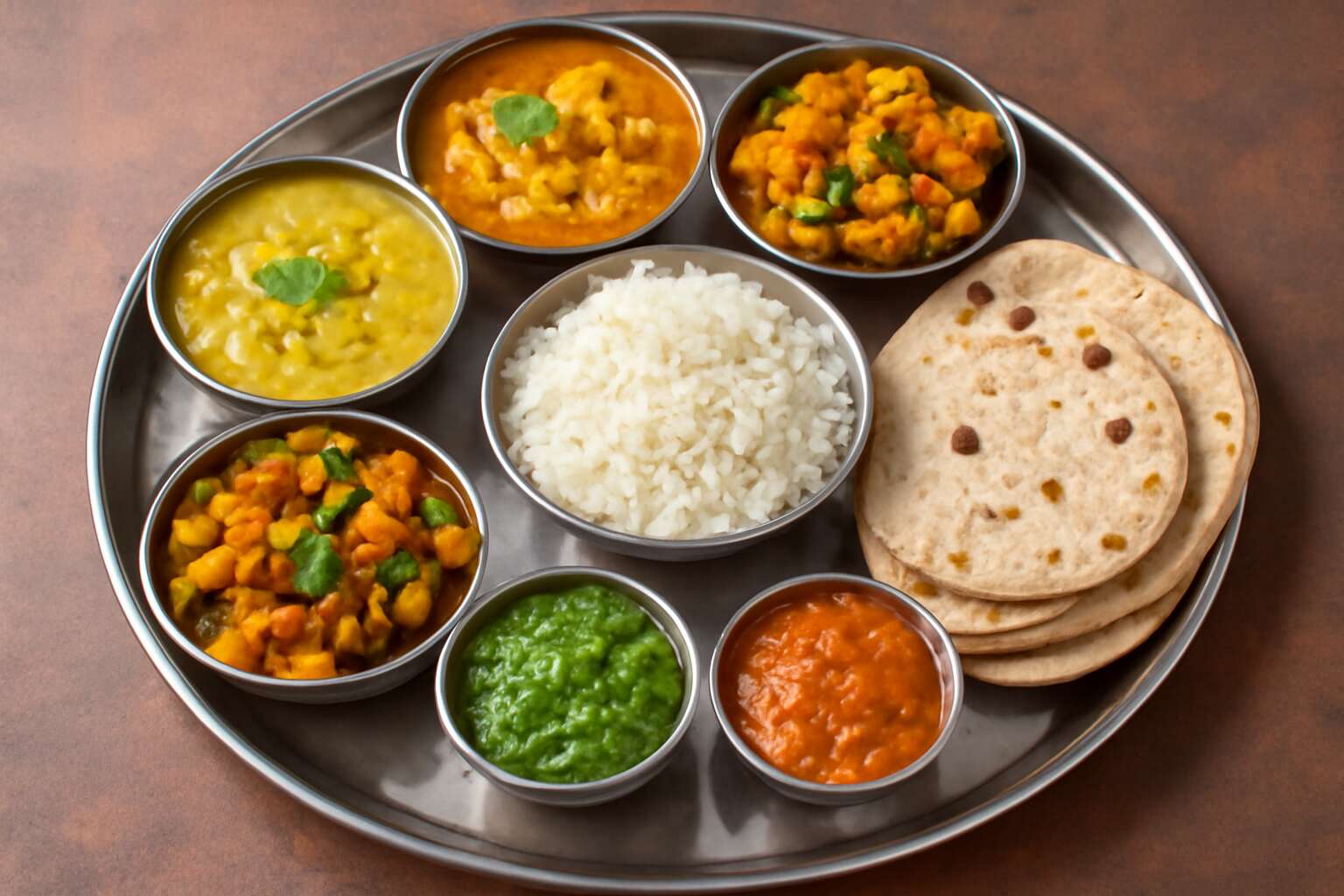
Punjabi veggie dishes and thalis
Punjab’s hearths blaze with a theatre of greens and ghee, where a chef whispers, “the heart of the plate lies here.” These Punjabi veggie dishes sit at the heart of the types of indian food veg, turning humble ingredients into celebratory plates.
Here, the thali becomes a sundial of flavors: a generous cornucopia of lentils, greens, chutneys, and breads.
- Sarson da saag with makki di roti
- Dal tadka with cumin and garlic
- Aloo gobi masala
- Kadhi pakora with yogurt drizzle
In South Africa, such a thali feels like a harvest feast, linking kitchens across continents with steam and spice.
Rajasthani and Gujarati vegetarian traditions
Cuisine is memory in spice—the saying goes, and in Rajasthan and Gujarat that memory wears vibrant, vegetarian clothes. For South African kitchens and the diaspora, these regional plates resonate with spice-loving palates. These regions subtly broaden the types of indian food veg, turning sun-kissed grains into narratives that travel beyond borders.
In Rajasthan, the desert yields dal bati churma, gatte ki sabzi, ker sangri, and bajra roti. The slow sweetness of dal mixed with crispy ghee-dotted bati captures a paradoxical warmth that anchors towns on cold nights and brightens festival tables.
Gujarati cuisine balances sweetness, tang, and savoriness—undhiyu with winter root vegetables, dhokla’s airy bite, and bhakri with a mosaic of veggies. It’s a manifesto of restraint and regional ingenuity, where sesame, jaggery, and tamarind harmonize at the same table.
Examples include:
- Dal bati churma
- Ker sangri
- Undhiyu
- Dhokla
Kashmiri vegetarian classics
Kashmir’s vegetarian table proves vegetables can be poetry in a pot, earning a quiet ovation without meat. In a land of saffron and yogurt, haak (collard greens) and nadru yakhni (lotus stems in cream‑yogurt gravy) glide with paneer in bright, fragrant gravies. These dishes, tempered by fennel, dried fenugreek, and green cardamom, offer a refined counterpoint to heavier regional profiles—an elegant reminder that the best Indian veg can be at once delicate and deeply satisfying. They sit comfortably among the types of indian food veg that travel well beyond their high-altitude kitchens.
Here are standout Kashmiri vegetarian classics:
- Haak (collard greens)
- Nadru yakhni (lotus stems in yogurt gravy)
- Kashmiri dum aloo (potatoes in saffron yogurt sauce)
- Chaman (paneer in a creamy red gravy)
For South African tables, these dishes offer a cooler, aromatic alternative—proof that regional Indian cuisine can surprise, seduce, and endure.
Mughlai-influenced veg dishes
Regional vegetarian fare with Mughlai influences elevates vegetables from side dish to centerpiece. Velvet gravies, cream, and nuts mingle with saffron, green cardamom, and toasted almonds, turning everyday greens into a royal feast. In South Africa, these dishes offer a lush alternative to fiery staples, delivering luxury without weight. The strength lies in restraint: opulent textures that let vegetables sing, aroma that lingers, and a refined finish that stays with you!
- Shahi paneer
- Navratan korma
- Malai kofta
These Mughlai-tinged veg dishes are a bridge between opulence and everyday cooking, widening the vegetarian table here. They expand the types of indian food veg available here.
Core vegetarian ingredients and dishes
Legume-based dals and curries
Steam curls from a simmering pot as lentils surrender into a silken embrace. In the landscape of types of indian food veg, core vegetarian ingredients—dals, chickpeas, and beans—drive legume-based dals and curries with quiet authority. Their humble pulses carry protein, fiber, and a warm, lingering kick that translates perfectly from bustling Indian kitchens to South African tables.
Core elements include:
- dal tadka — tempered yellow lentils with cumin, garlic, and a tomato base
- chana masala — chickpeas in a spiced onion-tomato gravy
- moong dal curry — green gram simmered with ginger and gentle spices
These legume classics prove that minimal ingredients can conjure maximum comfort, with flexibility to swap coconut milk or tamarind for local flair while preserving the soul of the dish. The result is versatile nourishment that sits neatly on a vegetarian menu and travels well to South Africa’s diverse palates.
Vegetable-forward sabzis and curries
In the landscape of types of indian food veg, vegetables themselves are the stars, not just supporting cast. Core vegetarian ingredients—fluffy potatoes, emerald spinach, crisp cauliflower, glossy okra—sauté or simmer into vegetable-forward sabzis and curries that comfort as much as they excite the palate. Seasonal produce keeps this repertoire fresh and endlessly adaptable, a backbone in types of indian food veg.
- bhindi masala — okra in a tomato-onion pan sauce
- aloo gobi — potato and cauliflower in a sizzling spice duet
- baingan bharta — smoky eggplant mashed with garlic and herbs
These dishes prove that a few humble vegetables can conjure maximum warmth, swapping in coconut milk or tamarind for local flair while travelling gracefully to South Africa’s diverse tables.
Paneer and dairy delicacies
South African diners are discovering dairy can be as essential as spice in a curry. A recent survey found 62% of vegetarian households reach for paneer at least weekly, proof that paneer isn’t garnish but a lead actor. This is the heart of the types of indian food veg, where dairy delicacies command the spotlight.
Paneer is the dairy darling—firm cubes that hold their shape through flame or simmer. It’s a versatile canvas for grilling, simmered curries, or a quick pan-fry. Try these crowd-pleasers:
- Paneer tikka
- Palak Paneer
- Shahi Paneer
Beyond the paneer parade, ghee, yogurt, and raita temper heat and add velvet richness, especially on breads and bhajjis. When carried to South Africa, these dairy delicacies mingle with local spices to create comforting, memorable meals that still feel authentically Indian.
Grains, breads, and festive accompaniments
Grains are the quiet backbone of Indian vegetarian cooking, and in South African kitchens their aroma signals a gathering as much as a meal. From everyday pulao to comforting khichdi, refined basmati and earthy millets carry memories of villages and festivals alike!
Within the types of indian food veg, core ingredients circle around grains, breads, and festive accompaniments. For lighter curries, basmati rice and brown rice glisten; for rustic depth, millets like jowar, bajra, and ragi answer the call. Breads—roti, chapati, paratha, naan—become the edible vessel for every veg curry. Chutneys, pickles, papad, and raita seal the feast.
- basmati and brown rice
- millets: jowar, bajra, ragi
- roti/chapati and paratha
Such grains and breads anchor the narrative of Indian vegetarian cuisine in South Africa, proving that a meal can be both humble and ceremonious—and that the spectrum of types of indian food veg extends far beyond paneer or curries.
Spice blends and seasoning foundations
“Great meals travel farther on a coriander leaf.” In South Africa, types of indian food veg shine when the core ingredients do the talking: vibrant vegetables, leafy greens, tubers, and seasonal pulses that keep flavor honest and lively, even when the spice rack is behaving itself.
From crisp bhindi to sun-warmed gourds in season, these core ingredients pair with tempering techniques—a quick toss of cumin seeds in hot oil and a splash of fresh ginger—to unlock depth without heaviness. The real trick is staging textures: crisp-edged bites, tender centers, and color that signals a feast. These elements form the backbone of vegetable-forward dishes that exist happily beyond the pantry’s reach.
Spice blends and seasoning foundations:
- Whole spices: cumin, coriander, mustard seeds
- Ground blends: garam masala, turmeric, coriander powder
- Fresh aromatics: ginger, garlic, green chilies
- Herbal notes: curry leaves, cilantro stems
Popular preparations and serving styles
Creamy curries and koftas
In South Africa, a fresh culinary pulse places creamy curries among the top five weekend comfort dishes, a doorway into types of indian food veg.
Creamy curries simmer with coconut milk, tomatoes, and a whisper of almond paste; koftas—made from mashed vegetables or chickpeas—drift in velvet gravies scented with saffron, coriander, and fenugreek. I love watching the koftas soften and sizzle, turning simple weeknights into a spellbinding feast.
- aromatic basmati rice that soaks up the sauce
- garlic naan for scooping the kofta-rich gravies
- millet roti for a wholesome, hearty finish
Let the steam rise as the kitchen writes its own small epic, where creamy textures meet sunlit spices and every bite tells a South African story.
Dry sabzis and stir-fries
Spice can be a whisper and a statement at once. ‘Texture is the true spice,’ a chef once told me. In the evolving types of indian food veg, dry sabzis offer texture, brightness, and a modern South African resonance.
Dry sabzis and stir-fries rely on high heat and swift tossing, letting vegetables char at the edges while staying crisp in the center. Bhindi fry, carrot-pepper medleys, and garlic-coriander tosses illustrate how everyday produce becomes a vibrant, weeknight centerpiece.
- With warm roti for scooping
- As a side to dal or kadhi
- Over millet pilaf for a lighter finish
These preparations translate well to South African tables, where fresh produce meets bold spices in elegant, uncomplicated form.
One-pot dal and rice combos
One pot, many stories. A grandmother in a sun-warmed kitchen whispered, “One pot feeds a hundred moods.” In the evolving types of indian food veg, one-pot dal and rice combos turn humble pulses into a comforting weeknight chorus that travels from Durban markets to Cape country kitchens.
Popular preparations and serving styles unfold in warm, practical ways. These one-pot blends reward patience and taste, simmering rice separately yet finishing together with a bright tempering.
- Red lentil dal with basmati, tempered with cumin and coriander
- Yellow moong dal with turmeric, spinach, and a lemon squeeze
- Toor dal with coconut milk and vegetables for a creamy finish
Serve with warm roti or millet pap, or a simple cucumber-yogurt raita. The result is nourishment that feels both homely and modern, a heartbeat of South African kitchens where heritage meets everyday resilience.
South Indian vegetarian staples like sambar and rasam
“A bowl of rasam travels farther than a passport,” a Durban chef likes to say. I’ve heard that truth echoed in South African kitchens where South Indian vegetarian staples like sambar and rasam carry bright tang and comforting warmth. These broths nourish everyday meals, poured over steaming rice or ladled beside idli and dosa. The secret lies in balancing sour with spice and tempering with curry leaves and coconut.
- over steaming rice
- with idli or dosa
- with coconut chutney and papad
The approach mirrors the diverse, friendly palate across SA—local produce, adaptable spice levels, and hospitality baked into every serving, a showcase of types of indian food veg.
Street-food inspired veg dishes
In the market aisles of South Africa, the types of indian food veg unfold like a living atlas—spice, sun, and aroma guiding every bite. “Street-food is the lingua franca of the kitchen,” a Durban vendor likes to say, and the sentiment rings true in every steaming parcel. I’ve chased smoke and citrus across market lanes, finding warmth in chutneys and a tang that turns a snack into a memory.
Here are some street-food-inspired veg dishes that travel well and celebrate flavour over flame:
- vada pav
- pav bhaji
- ragda patties
They offer texture and punch—crunch, cream, and citrus—turning a quick bite into a social ritual, a flame-lit vignette of India’s vegetarian street cuisine.
Fermented and pickled vegetables in Indian cuisine
In South Africa, diners savour how a jar of achar can awaken a plate; among the types of indian food veg, fermented and pickled vegetables anchor meals with sun-bright tang. These condiments travel beyond borders, carrying history in oil and spice.
Fermentation deepens texture and aroma, lending a succulent acidity that dances with rice, dal, and flatbreads. Pickles serve as palate-cleanser and conversation starters—little jars cracked open at the table, their lemony zing waking curry and vegetable medleys alike.
- Mango pickle (aam achar) for warm-weather brightness
- Lime pickle (nimbu achar) with citrus lift
- Avarekai or hyacinth bean pickle for a rustic bite
- Mixed vegetable pickle featuring carrot, cauliflower, and peppers
Health-conscious and dietary-friendly Indian veg
Vegan and dairy-free vegetarian options
South Africa’s diverse palates crave flavor with mindfulness; 40% now choose plant-forward meals at least a few times a week, and Indian veg dishes answer that call with grace. Within the spectrum of vegan and dairy-free vegetarian options, the types of indian food veg unfold as vibrant, nutrient-dense fare—bright, oil-light curries, tangy tomato gravies, and smoky roasted vegetables that honor both taste and wellness!
Here are vegan-ready staples that travel well across kitchens from Cape Town to Pretoria:
- Chana masala — chickpeas in a zesty tomato gravy (vegan, oil-based)
- Baingan bharta — smoky roasted eggplant with onions and spices (vegan, oil-cooked)
- Mixed-vegetable curry — seasonal vegetables in a warming spice blend (vegan, oil-based)
Each plate becomes a poem of balance, where protein from legumes meets vibrant vegetables, all carried on a curtain of spice and sunshine—an inviting beacon for readers seeking healthful, dairy-free options!
High-protein vegetarian meals
Across South Africa’s health-forward kitchens, high-protein vegetarian meals anchored in pulses and millets are redefining the types of indian food veg. Plant-forward dining has grown by 40% in major cities, echoing a collective turning inward toward nourishment that respects both body and planet. Protein density matters as much as color and aroma. Pulses, millets, greens, and whole grains deliver nourishment with elegance.
- Pulses and legumes anchor protein—chickpeas, lentils, and beans.
- Millets and whole grains to pair with curries for complete amino acids.
- Leafy greens and cruciferous vegetables for micronutrient density.
- Seeds, nuts, and tempering spices to boost texture and satisfaction.
Gluten-free Indian veg options
Plant-forward dining has grown by 40% in major South African cities, a signal that nourishment is being treated as both care and craft. Within the spectrum of types of indian food veg, gluten-free Indian veg options offer clarity to diners seeking balance, flavor, and ease of digestion. Curries simmer beside crisp breads, all shaped by grains that honour the body and the planet; spice winds weave through the kitchen like stories of old.
- Jowar roti (sorghum) — a gluten-free staple that folds easily into curries.
- Bajra roti (pearl millet) — nutty, hearty, naturally gluten-free.
- Dosa or Idli (fermented rice and urad dal) — light, gluten-free staples for breakfast or bowls.
These options align with health-conscious kitchens where pulses, millets, and greens meet in harmony, revealing the beauty of the types of indian food veg while keeping digestion light and bright.
In South Africa, this celebration of the types of indian food veg invites a new culinary folklore around gluten-free grains.
Low-oil cooking techniques for healthier meals
Forty percent rise in plant-forward dining has reshaped SA’s kitchens, where nourishment is both ritual and craft! I hear the kitchens hum with the quiet intensity of healthier, lighter meals. In this mood, health-conscious eaters seek low-oil methods that coax flavor from vegetables and pulses without heaviness on the digestion.
These low-oil techniques keep the body lit with energy and the palate awakened:
- Dry-roasting spices and vegetables to bloom aroma without oil.
- Steaming, pressure-cooking, or simmering with minimal water for tenderness.
- Light tadka using a skillet spray or a whisper of oil, just enough to wake the spices.
- Roasting or baking vegetables to develop sweetness and texture.
In the spectrum of types of indian food veg, this approach celebrates balance—savory depth without heaviness, suitable for busy South African households and shared tables alike.
Seasonal vegetable usage and preservation ideas
A 40% surge in plant-forward dining reshapes SA kitchens, where nourishment is both ritual and craft. In this mood, the types of indian food veg feel more relevant than ever, offering health-conscious options that soothe digestion while preserving vibrant flavor.
Seasonal vegetable usage guides South African homes toward freshness and balance. By embracing local harvests and preservation ideas, cooks extend flavour without heaviness. Here are methods that fit into low-oil, plant-forward curries and sabzis.
- Blanching and freezing leafy greens to lock in nutrients.
- Quick-pickling carrots and radish for brightness.
- Roasting vegetables to concentrate sweetness for curries.
- Sun-drying gourds and peppers for long-lasting texture.
Using seasonal picks helps reduce waste and supports growers; it also ensures dishes remain lively without becoming heavy. The approach aligns with the South African palate, where vibrant vegetables meet spice and tradition in harmony, a glimpse into the types of indian food veg shaping kitchens.
0 Comments