
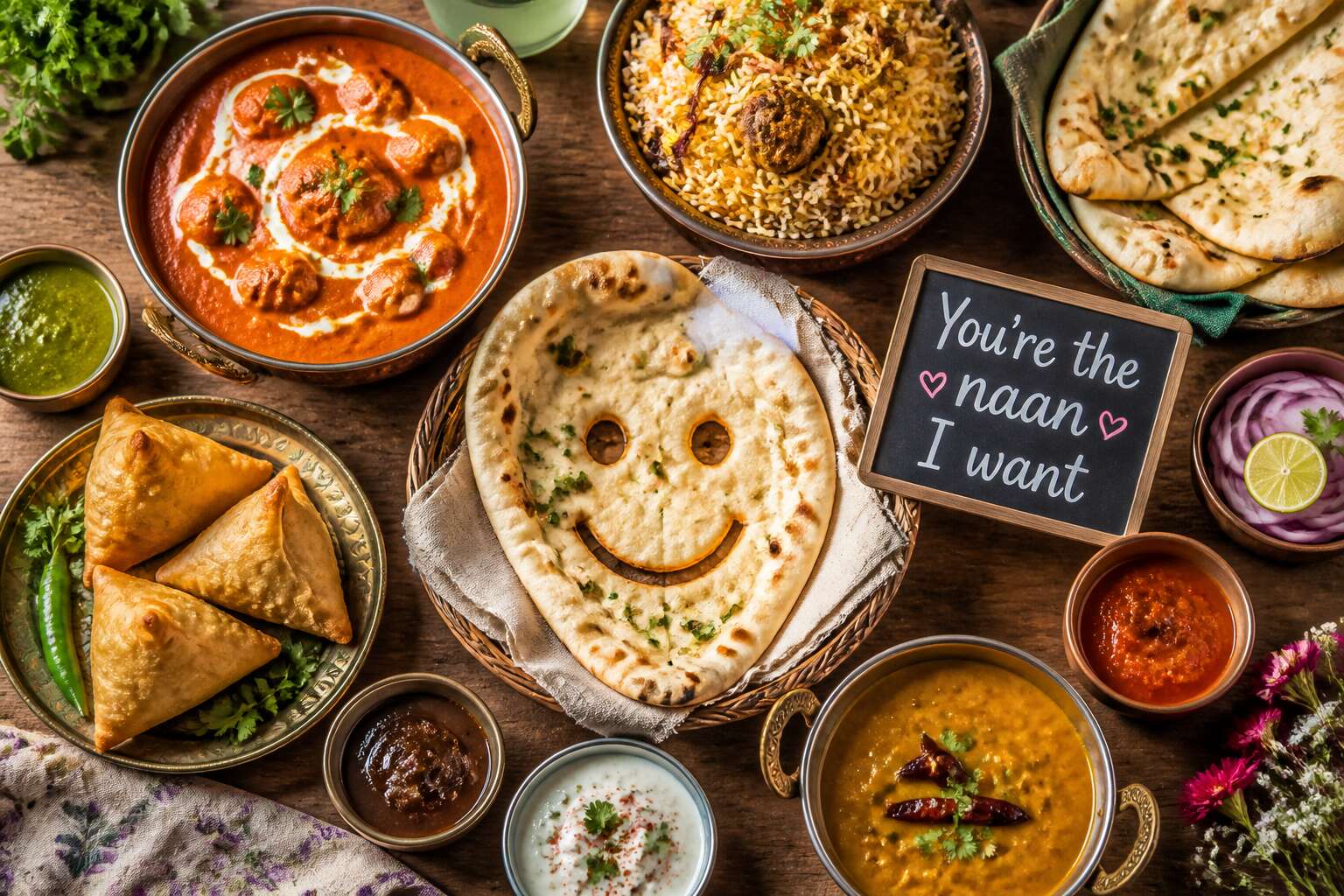
The Universal Appeal of Indian Cuisine Humor
Why Food Jokes Work Across Cultures
Indian food jokes travel remarkably well. They rely on sensory memories every eater understands, the sting of a green chilli, the comfort of warm naan, the generosity of a thali. In my experience, a punchline about spice tolerance lands the same in Durban as it does in Delhi. That shared recognition makes the humour feel personal.
Consider what a joke about butter chicken or masala dosa actually does. It invites the listener to recall their own table, their own grandmother’s recipe, or their own first attempt at eating an extra hot curry. Cross-cultural food humour works in both settings. It does not demand context. It demands appetite.
A few reasons food humour crosses borders seamlessly:
- Food is a universal daily ritual.
- Indian cuisine appears globally in restaurants.
- Spice reactions offer physical, visible comedy.
The result is that indian food jokes offer a rare form of connection, one that needs no translation for a South African audience raised on bunny chow and dhania.
The Role of Spices in Comedy
Indian food jokes often begin with a promise, the bold claim that this curry is not so hot. That promise crumbles in three bites. The universal appeal of Indian cuisine humor rests on this honesty, since spice tends to leave everyone with a story worth telling.
Spice controls the timing of these jokes. The heat arrives on the second bite, when confidence is highest, and follows a predictable path.
- The confident mouthful.
- The sudden pause.
- The reach for water.
- The insistence that it is delicious.
In South African homes and restaurants, I have watched this sequence play out with bunny chow and dhania on the table. Indian food jokes about spice capture the ritual of testing your own limits, then turning the burn into shared laughter.
Indian Food as a Punchline Generator
Every plate of biryani hides a built-in punchline. In Durban, I have watched friends lean over a steaming bunny chow, hesitate, then laugh through the first bite. Indian food jokes work because the dish itself sets the rhythm, and the eater becomes the straight man.
The food leaves room for the unexpected. A chapati that splits at the wrong moment, a curry that stains a white shirt, a spoon that clinks louder than the conversation. These small failures turn a meal into comedy without a single scripted line.
Consider the standard ingredients of a good laugh:
- A mild curry that surprises on the third spoonful.
- A waiter who insists the extra chilli is free.
- A table of guests all reaching for the same water jug.
Indian food jokes need no translator, just a willing eater and a bottle of water nearby.
Bollywood’s Influence on Culinary Comedy
Bollywood has spent decades proving that a perfectly timed curry splatter can outshine any dialogue. When Shah Rukh Khan fumbles a samosa before a romantic confession, audiences in Johannesburg and Mumbai laugh at the same moment. Indian cuisine humor lives in this shared recognition. A kitchen mishap is a kitchen mishap, whether in Sandton or South Mumbai.
Indian cinema weaponizes food for comedy with surgical precision. Consider the classic tropes:
- The guest who praises the host’s cooking without swallowing.
- The grandmother who takes offense when a plate returns half empty.
- The wedding caterer who runs out of paneer at the most dramatic instant.
These scenes translate effortlessly because indian food jokes rely on family pressure, hospitality rituals, and the common terror of offending a cook. The best indian food jokes work because everyone has lied about loving a dish. South African audiences recognize the stakes immediately. Bollywood simply adds the song and dance.
Classic Indian Bread and Curry Puns
Naan-Stop Laughs
The unassuming naan holds more punchlines than a stand-up routine. In the bustling kitchens of Durban or the quiet suburban ovens of Joburg, the real entertainment starts when the bread meets the curry. I have watched friends bend over a table, tears in their eyes, from a simple pun about a roti. The best indian food jokes are the ones that arrive without warning. For instance:
- Why did the naan break up with the curry? It needed some space.
- What do you call a sad lentil? A daal cloud.
That wordplay is the perfect pairing with a crisp paratha and a slow-cooked butter chicken. It is the tongue slipping on a syllable that makes the whole room wobble! I have seen grown men weep over a well-timed “naan-sense” joke, and it always works because the food itself is so serious about its own deliciousness. So when you ask for indian food jokes, remember that the dough and the curry are the true sources of the humour.
A Naan-Binary Approach to Puns
The humour works like a binary system. The naan brings the stoic, floury side. The curry brings the heat, the wobble, the unexpected splash. Together they complete a punchline. In South African homes, we respect this pairing. A good pun lands only when the bread is warm enough to carry the joke without going soggy.
Consider these classics:
- What did the curry say to the naan? You complete me.
- Why did the roti go to therapy? Too much pressure.
The best indian food jokes rely on this interplay. The bread sets up, the curry pays off. I once watched a friend laugh through a mouthful of paratha, nearly choking on a pun about dal. He did not care. The joke won.
The Best Curry Favor for Your Funny Bone
At a Durban dinner party, the arrival of a sag paneer signals the start of serious business. Yet the best humour arrives between dips. I recall a host who shared this indian food joke: “Why did the naan apply for a loan? It wanted a little more rise.” The table groaned, but the curry demanded a second serving.
Classic bread and curry puns succeed because they hinge on everyday conversations. A roti’s flatness, a poppadom’s crunch, these are familiar textures. Consider a few timeless offerings:
- Why did the curry and naan get married? Because they made a perfect pair.
- What kind of bread tells the most stories? A naan-fiction.
The charm of these indian food jokes is their refusal to take the material too seriously. Sincerity belongs to the chef. The joke belongs to the company. A well-landed curry pun connects the kitchen to the conversation. That connection is the real flavour.
Tandoori Twist: Grilled Giggles
The tandoor is a comic venue. Every blistered bread that emerges carries the potential for a punchline. Classic bread and curry puns work because they mirror the table ritual: the dip, the tear, the satisfied crunch. My favourite indian food jokes come from a Durban family who treat the grill like a stand-up stage.
- Why did the tandoori roti stay calm? It was used to the heat.
- What did the curry say to the stale naan? You have lost your bounce.
- Why did the paratha get promoted? It finally showed some layers.
The puns land because everyone has torn a piece of bread and watched it soak up gravy. That shared ritual turns a simple line into a table-wide laugh. The best indian food jokes need no elaborate setup, only a warm bread and a willing audience. The tandoor provides the smoke, and the company provides the groans.
Paratha Perfect Timing
Paratha puns follow a slower rhythm. This layered bread demands patience, flipping through crisp brown stages before it reaches the table. When it finally arrives, the moment is ripe. A line about flaky behaviour lands best while the paratha is still steaming and the curry bowl is circling.
Good indian food jokes match the rhythm of tearing and dipping, that brief silence before the first bite. They tap into this pause, arriving folded and golden like the paratha itself.
- The paratha asked for silence, it needed to focus on its layers.
- Why did the curry refuse to fight? It was already too thick in the middle of things.
For South African tables, indian food jokes feel familiar because the ritual is familiar. The paratha plays the straight man, the curry lands the punchline, and everyone waits for that perfect second to serve both.
Family Dinner Jokes and Restaurant Quips
When Dad Orders Extra Spicy
A family dinner at an Indian restaurant produces predictable comedy, but the real performance starts when dad orders extra spicy. He watches for that approving nod from the waiter, then takes a generous first bite. The silence that follows is the punchline.
These moments become the indian food jokes that get retold at every subsequent gathering. The sweat on his forehead, the glass of water he pretends not to need, the nonchalant comment about liking heat. Everyone reads it differently:
- Mom catches his eye with a knowing smile
- One kid laughs too loudly
- The other kid quietly films the whole thing
Restaurant quips add another layer. When the waiter brings extra yogurt, dad insists he can handle it. When someone orders a mild butter chicken, he calls it a waste of a visit. These indian food jokes work because the family plays along, and the punchline lands without needing explanation.
Waiters, Raita, and Side-Splitting Requests
The family table operates on unspoken rules. The waiter arrives with raita as a way out. The person who demanded extra spice refuses it. This tension is where indian food jokes live. They need no punchline. They need the particular silence after a first bite, the knowing glance between siblings, the waiter’s performative bow as he retreats.
Side-splitting requests often follow a pattern:
- Ordering vindaloo ‘from the chef’s own recipe’
- Asking for a raita that arrives before the main course
- Requesting extra chillies ‘on the side’ despite warnings
These requests are never about the food. They are about proving something to the family. The waiter understands this better than anyone. He nods gravely, then lets the dish speak for itself.
The Great Leftover Debate
The great leftover debate begins when the waiter clears the table. Someone always asks for the box. Someone else rolls their eyes. That container of butter chicken will travel home, survive a night in the fridge, and become a secret lunch. The person who claimed it will defend it with a ferocity usually reserved for parking spaces. This is where indian food jokes find their second life.
Restaurant quips about leftovers often circle the same truths:
- The one who ordered mild will suddenly claim the leftover vindaloo.
- The aunt who said she was full will politely ask for half of yours.
- The father who mocked the takeaway box will later sneak bites at midnight.
These little performances are not about hunger. They are about nostalgia, thrift, and the quiet magic of a curry that tastes better the next morning. In Stellenbosch or Durban, the ritual remains the same. The box is a trophy. The debate is the family’s true sport, and indian food jokes are the soundtrack.
Food Coma Confessions
Family dinner jokes arrive between the second and third helpings. Someone always declares they are done, only to reach for another piece of garlic naan. The confession follows within minutes: “I cannot move.” That is the food coma speaking. It is a truthful moment.
Restaurant quips take on a similar rhythm. Strangers at neighbouring tables exchange knowing glances as plates are cleared. A waiter overhears a groan and smiles. The indian food jokes that surface during these final moments are soft, unhurried, and honest.
Some confessions are worth collecting:
- The person who claims they will skip dessert, then orders two.
- The one who blames the portion size, not their appetite.
- The diner who requests the bill while still chewing.
In Durban, these scenes play out nightly. The laughter carries, and indian food jokes linger long after the table is wiped clean.
Bringing Your Own Heat: Hot Sauce Humor
A ghost pepper sauce bottle often beats the conversation starter. In South African homes, the person who brings their own heat draws immediate attention. They promise restraint, then add a drop to butter chicken. The room leans in! The indian food jokes begin with a challenge: “Is that for the food or your ego?”
- The uncle who claims no ceiling to his tolerance.
- The cousin who adds sauce before tasting.
- The friend who refills the bottle unnoticed.
Restaurant quips match the rhythm. Waiters brace when a guest pulls out a small vial. Someone asks for a fire extinguisher. Another suggests charging extra for the gasp. These indian food jokes honour the brave and the reckless. The heat becomes a shared memory, long after the table clears.
Regional and Cultural Food Humor
South Indian Sambhar Stand-Up
In the humid kitchens of Tamil Nadu, sambhar simmers with tamarind and asafoetida. The stand up comic knows this. They speak of grandmothers who measure sambhar with obsessive precision. The audience shivers from recognition, not spice.
South Indian regional humor centers on this culinary devotion. The standard jokes circle the eternal question: is the sambhar too thin or too fierce? A comedian might whisper about the guest who asked for extra sambhar, only to receive a portion that caused tears. These indian food jokes work because sambhar carries identity and nostalgia. In family gatherings, the correct consistency of sambhar can end relationships.
Punjabi Paratha Puns
Punjabi paratha pundits rarely need a microphone. They simply lift the lid of a steel tiffin and announce that the aloo has gone missing. Every family has a designated paratha critic, someone who flips it with a spatula and declares the crispness level aloud. These indian food jokes travel well because paratha humour works through texture and physical ritual.
One common gag goes: what did the paratha say to the butter? Stop applying pressure. Another favourite: why is paratha a great negotiator? It always flips the argument.
Classic Punjabi paratha puns worth retelling include:
- This paratha is so loyal, it never leaves the plate.
- My grandmother says a paratha without ghee has no character.
- You can forgive a burnt paratha, but never a stingy one.
Bengali Sweets and Sharp Jokes
Bengal runs on sugar and sharp opinions. The culture that perfected the rosogolla also refined the art of the withering remark. In a Kolkata adda, you can watch a conversation drift from mishti doi to a precise critique of your personality in under a minute. I have seen it happen to friends who merely asked for the time.
Regional indian food jokes often depend on this balance. Bengali sweet humor is a family affair. The jokes circle around who took the last sandesh, who ruined the payesh, and which relative deserves the smallest piece. The tone stays polite. The words do not. These indian food jokes work best at close range, where the target can hear every syllable.
- Never trust a Bengali who offers you sweets without a comment.
- The rosogolla debate is about origin. The real fight is about the last piece.
- Auntie’s sweetest smile delivers the sharpest observation.
Street Food Vendor Wit
Street vendors deliver some of the sharpest indian food jokes in the country. The grill hisses. The queue shuffles. A vendor insults your choice of chutney, questions your tolerance for heat, and still hands you a plate worth more than the coins you paid. These jokes emerge from smoke and impatience.
A vendor in Mumbai once told me my samosa would outlive my ambitions. I ate it anyway. That is the contract. You take the ribbing, you get the food.
Certain lines repeat across every city:
- The chutney is older than your excuses.
- The oil is hotter than your temper.
- The price is higher than your respect.
The crowd’s laughter covers the moment between insult and appetite. Everyone leaves satisfied. That is the real punchline.
Gujarati Thali Teasing
The Gujarati thali insults your previous meals. The waiter leans over, spoon raised, and asks if your rotli is broken or just surrendered. That is the opening move. You laugh because crying would interrupt the refills.
The teasing follows a strict regional script:
- Your appetite is smaller than your ambition.
- That shrikhand is not for dessert, it is for morale.
- You call this finished? The farsan is still judging you.
These taunts sit at the heart of indian food jokes. The humor is relentless affection. The thali keeps coming. The jokes keep landing. You leave defeated, full, and already planning your next round. That surrender is the real punchline!
The Great Chai vs. Coffee Comedy Rivalry
Every chai wallah knows the real comedy begins when someone orders coffee. The steel tumbler gets a sideways glance. The pour slows down for effect. Coffee drinkers hear it all: “Is this a beverage or a status symbol?” This rivalry drives more indian food jokes than any spilled masala ever did.
The humor lives in the ritual. Chai is shared, poured, spilled, argued over. Coffee is a personal affair, brewed slowly, guarded closely. A chai loyalist watches a coffee lover measure beans, and the jokes write themselves.
- Chai asks for company, coffee asks for quiet.
- Chai is the guest, coffee is the host.
- One starts conversations, the other ends them.
Both sides claim victory. Neither changes their order. That is the quiet genius of this comedy. It never resolves, it just refills.
Creating Your Own Indian Cuisine Jokes
Ingredients for a Good Punchline
Creating your own indian food jokes is a craft of tension. The setup must paint a familiar scene, while the punchline twists it into an absurd corner. A joke about a pregnant dosa or a sambar that refuses to cool works because the audience knows the textures and temperatures. The best punchlines do not explain themselves. They land in the silence.
Consider the building blocks. A good punchline hinges on three elements. First, a dish with a strong character, like a sticky jaggery sweet. Second, a universal frustration, such as a stubborn lid on a pickle jar or a queue at the bunny chow stand. Third, a delivery that stays calm while the subject becomes loud.
- Pick a dish that evokes a specific memory, like the crisp of a paper roast.
- Add a twist involving a process, such as grinding fresh coriander.
- End with a word that sounds like a knock, but means a bowl.
This approach keeps indian food jokes renewable. Each retelling adds a layer, much like a slow-cooked curry. The laughter remains because the ingredients are honest.
Using Bollywood References Wisely
Bollywood references in indian food jokes can elevate a simple gag. The trick is restraint. A joke about a biryani that refuses to share its secrets works because the audience remembers the dramatic pauses in a classic film. But stuffing every line with movie names turns the joke into a quiz.
Pick one specific reference. For instance, the way a character delivers a line about revenge can match the way a vindaloo builds its heat. The audience laughs because they recognize the tension. Use the reference to amplify the dish’s personality, not to replace it.
For a South African audience, the reference needs clarity. What works in Mumbai may not resonate fully in Durban. Keep the reference broad enough to land. The laughter comes from the familiar film trope meeting the familiar food texture. When the reference supports the joke, your indian food jokes feel effortless.
Balancing Cultural Respect and Humor
Food humor can turn into a minefield if you ignore the culture behind the dish. For South African readers, the best indian food jokes celebrate the cuisine without mocking its origins. I once tested a line about a samosa’s flaky secrets at a Durban braai. The laughter came from shared experience, not from cheap stereotypes. Respect shows up in the details you choose to highlight. For example, a joke about the patience required to fold a perfect curry leaf parcel works because it acknowledges the skill. Consider these principles when crafting your own:
- Focus on the sensory experience, like heat or aroma.
- Highlight the communal nature of sharing a meal.
- Let the dish’s character drive the punchline.
The result feels playful, not condescending. Keep your observations specific and your humor gentle. That way, your indian food jokes land with warmth.
Testing Your Jokes on Friends and Family
Your own kitchen is the finest laboratory for indian food jokes! Start with an observation only your family would understand, like the ritual of who gets the last butter naan. That specificity is the seed of a good punchline.
Testing happens naturally at a Sunday gathering. I try a new line about the patience of rolling phyllo or the steam rising from a biryani pot. If my aunt snorts into her chai, that is a better review than any applause.
- Watch for the delayed laugh, it means the joke took a second to land.
- Notice which dish names trigger the warmest response.
- Drop a line that bombs, then reroute it and try again.
The best indian food jokes are shaped by silence and repetition. A line that fails on Thursday might slay a crowd on Saturday. Every misfire becomes material for the next round.
Timing and Delivery: The Secret Chutney
Punchlines get lost when rushed. Timing decides whether an indian food joke lands or evaporates. I watched a Mumbai uncle deliver a line about overpriced naan at a family gathering. He paused for three seconds after the setup. The room broke apart. That pause was not accidental.
Delivery depends on reading the table. A joke about a heavy curry works better after the plates are cleared. The same line can fail on Monday and work by Saturday. I test phrases against the rhythm of my own speech. Slowing the final word changes everything!
Good timing follows a pattern:
- The listener needs a half beat to picture the dish
- The punchline arrives after the image forms
- The reaction gets space to grow
Indian food jokes reward repetition. The more I tell a line, the more I learn where to breathe. That breathing is everything.
0 Comments