
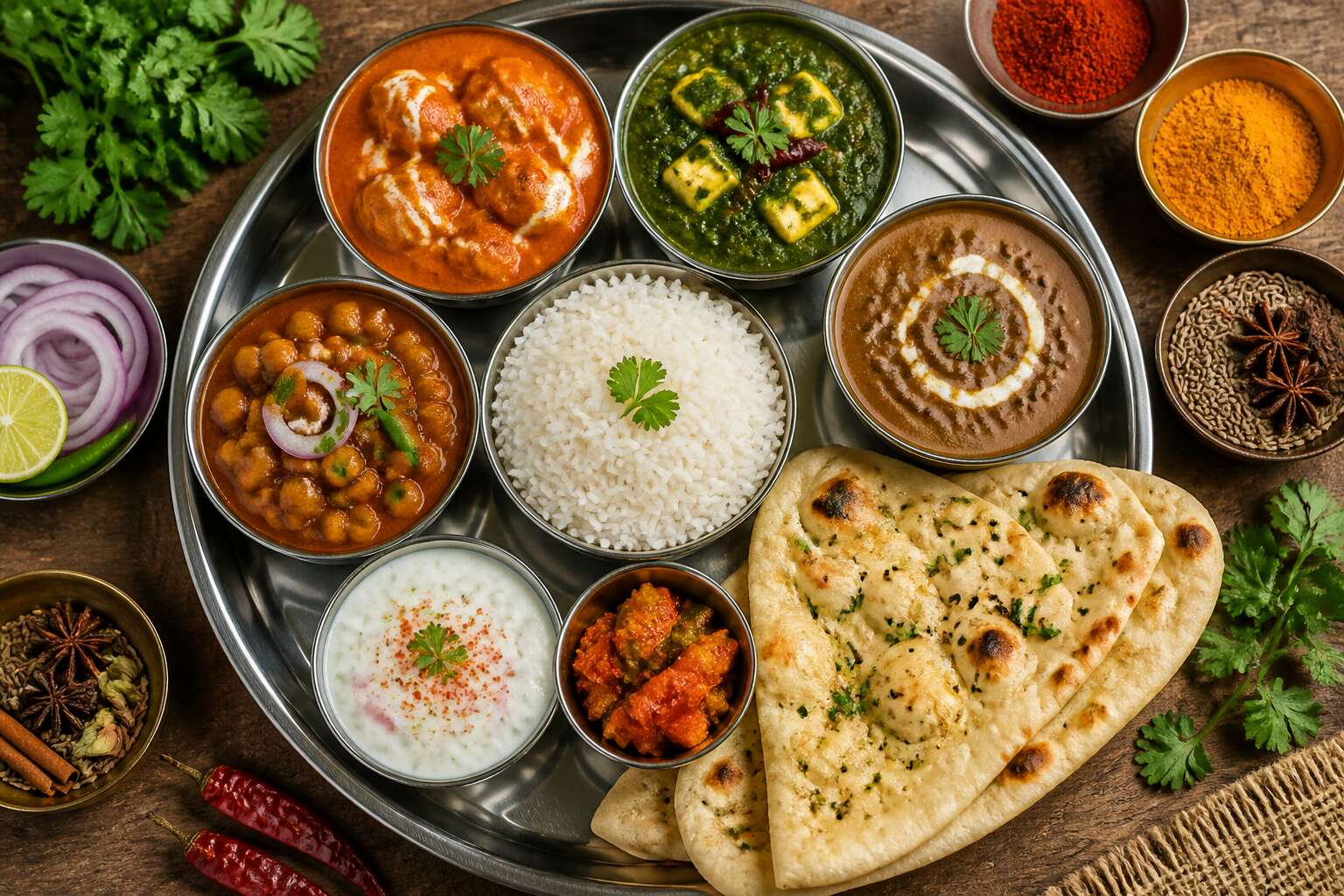
Regional Indian Cuisines to Explore
North Indian Comfort Foods
To answer what type of indian food should i try, begin with North Indian comfort foods. These dishes depend on slow braises, whole spices, and generous pats of butter. Think of sarson ka saag with makki ki roti, or a bowl of rajma simmered for hours.
- Butter chicken, a creamy tomato curry
- Chole bhature, fluffy bread with spiced chickpeas
- Kheer, a rice pudding scented with cardamom
The region’s cooking varies from Punjab’s robust flavours to Uttar Pradesh’s subtle elegance. Each meal offers a warm sense of home. For those new to this cuisine, these North Indian staples provide a satisfying entry point.
South Indian Light and Fermented Specialties
South Indian kitchens turn a simple batter of rice and urad dal into something magical. Fermentation introduces a gentle tang, making meals like idli and dosa light on the stomach yet deeply satisfying. If you ask what type of indian food should i try beyond the creamy curries of the north, these specialties offer a crisp contrast. The same batter gives birth to many forms:
- Idli, steamed rice cakes
- Dosa, a thin golden crepe
- Vada, a savoury lentil doughnut
- Uttapam, a thick pancake with vegetables
Sambar, a spiced lentil stew, and coconut chutney accompany each dish. Meals feel wholesome without heaviness! A plate of masala dosa with its potato filling and crisp edges remains a personal favourite for breakfast or supper.
East Indian Sweet and Savory Traditions
East India answers the question of what type of indian food should i try with a clash of sugar and spice. Bengal and Odisha turn milk into ethereal sweets, yet their streets sizzle with fierce savoury bites. This region refuses to pick a side.
Sweet traditions here feel almost alchemical. Rasgulla bounces with syrup, while sandesh sets like soft cheese. Mishti doi ferments whole milk into caramelised yogurt, a dessert that hums with depth. These sweets rely on patience, not heavy cream.
Then the savoury side strikes back. Kolkata’s street corners offer snacks that snap, crunch, and burn:
- Phuchka, hollow shells filled with spiced tamarind water
- Jhalmuri, puffed rice tossed with mustard oil and chopped onions
- Kathi rolls, flaky parathas wrapped around spiced meat or eggs
Each bite delivers a sharp tang, a sudden heat, and a reason to keep exploring this cuisine. East India never settles for bland.
West Indian Coastal and Desert Flavors
The west of India cooks like a split personality, and that is the charm. Coastal Maharashtra and Goa lean on coconuts, seafood, and sharp palm vinegar, while Gujarat treasures vegetarian restraint and Rajasthan revels in arid indulgence.
For those asking what type of indian food should i try, these states offer clear choices:
- Goan fish curry simmered in grated coconut
- Patra, rolled colocasia leaves with tamarind
- Ker sangri, a desert bean and berry curry
Each dish respects its landscape. The sea provides one path, the sand another.
Must-Try Indian Dishes for Beginners
Creamy and Mild Curries
A first taste of Indian food should never feel like a dare! When people ask what type of indian food should i try, I always point to creamy, mild curries. A good korma, thickened with nuts and yogurt, offers gentle spice and a velvety mouthfeel. Paneer makhani does the same for vegetarians, where cottage cheese absorbs a tomato and cream sauce. These dishes avoid fiercer chillies, using cardamom, coriander, and a touch of sugar.
I have watched newcomers smile over dal makhani, black lentils simmered for hours. The richness feels reassuring.
- Korma: nutty, yogurt based
- Paneer makhani: creamy, tomato forward
- Dal makhani: earthy, buttery
Pair any with plain naan or steamed rice. Graceful and mild, these curries answer the question without overwhelm.
Tandoori and Grilled Specialties
South Africans understand the primal appeal of fire and smoke. Our braai culture is a point of pride, so it is no surprise that tandoori cooking resonates deeply. If you are still asking what type of indian food should i try moving forward, look toward the clay oven. This is where Indian food shows off its prowess with char and flame.
Tandoori chicken is the undisputed icon of this method. The meat is marinated in yogurt, ginger, garlic, and a blend of spices that includes a generous dose of Kashmiri chilli. That chilli provides a vivid red color without the searing heat you might fear. The high heat of the tandoor sears the outside, locking in juices and creating a slightly charred, smoky flavor that is simply addictive. Foil wrapped and served with a simple salad and a wedge of lemon, it is an honest and fulfilling meal.
Seekh kebab offers a different texture but the same smoky soul. Minced lamb is mixed with herbs, green chillies, and a bit of fat, then pressed onto long metal skewers. The result is a juicy, slightly rough-textured sausage that breaks apart easily with your hands. It is street food elevated to fine dining.
For those who prefer a lighter option, grilled fish tikka is the way to go. A firm white fish, often kingklip or hake here in South Africa, is cut into cubes and marinated in a similar spice mix before being grilled. The fish stays flaky and moist, with a subtle char that complements the spice rub.
– Tandoori chicken: smoky, succulent, and visually striking.
– Seekh kebab: robust, herby, and ideal for eating with your hands.
– Fish tikka: a lighter, flaky alternative that does not sacrifice flavor.
The beauty of tandoori food lies in its directness. The journey of answering what type of indian food should i try is about embracing new tastes. But these grilled specialties feel familiar because they speak the universal language of fire. They are perfect for sharing, perfect for a first date, and perfect for breaking bread, or in this case, naan, with someone new. You get the smoke, the spice, and the satisfaction without the complexity of a heavy curry sauce. In a country that loves a good braai, these dishes feel less like an introduction and more like a homecoming.
Iconic Indian Breads and Rice
The question of what type of indian food should i try often loses its urgency when the bread basket arrives. Naan is the familiar entry point, but the tandoor gives it a blistered, puffy character that defines the experience. Pulling apart a piece of warm, garlic-buttered naan to scoop up a rich curry is a tactile pleasure. It is the bridge between the plate and your senses.
For a different texture, roti offers a whole wheat option that is thinner and more rustic. It is less indulgent than naan but carries its own appeal, especially when you want the sauce to be the star. Paratha is another choice, a layered flatbread that is often stuffed with potato or paneer. It feels more like a meal on its own, substantial and satisfying.
Rice is the quiet foundation of Indian dining. Steamed basmati rice is the standard, with its long grains and fragrant aroma. It absorbs the gravies without becoming soggy, a perfect counterbalance to intense spices. The real showstopper is biryani, a layered rice dish with saffron, meat or vegetables, and fried onions. It is a complete meal in one pot.
– Naan: soft, leavened, and perfect for scooping.
– Roti: thin, whole wheat, and lighter on the palate.
– Paratha: layered, often stuffed, and deeply filling.
– Steamed basmati rice: the neutral canvas for bold curries.
– Biryani: aromatic, complex, and a meal in itself.
When you are still deciding what type of indian food should i try, the sides matter as much as the mains. A table without these breads and rice feels incomplete. They are not mere fillers. They are essential components that balance heat and texture. My advice is to order a mixed basket of breads to sample the range. Pair it with a simple rice dish to see how the flavours work together. The answer to what type of indian food should i try becomes clearer when you taste how these elements complement each other.
Street Food Favorites
In Durban, the street cart has no patience for indecision. A samosa offers a crisp shell and a spiced potato centre. Chaat layers crunchy puris, tangy tamarind, and cooling yoghurt. If you are asking what type of indian food should i try, these snacks are the honest entry point.
- Samosa: triangular pastry, perfect with mint chutney.
- Pani puri: hollow spheres filled with spiced water.
- Vada pav: spicy potato fritter in a soft bun.
Street food skips the ceremony. You eat with your hands, you stand, you share. The heat sneaks up on you! The flavours refuse to apologise. I have learned that a quick taste test of three or four items settles the matter more effectively than any menu reading.
Desserts and Beverages
The question of what type of indian food should i try often gets answered with curries and breads, but the sweet finale is where a culture truly reveals its hand. Indian desserts are not subtle. They are generous with sugar, rich with dairy, and often perfumed with cardamom or saffron. For a first timer, the gateway is Gulab Jamun, a deep fried milk ball soaked in rose syrup. Its warmth and density feel familiar, almost like a soft doughnut that has surrendered to a sweet bath.
A lighter option, and one that holds up well in the Durban heat, is Kheer. This is a rice pudding, slow cooked until the grains collapse into the milk and the whole thing turns creamy. It goes well with a strong cup of tea, not as a replacement for it.
For drinks, Masala Chai is the obvious starting point. It is black tea boiled with milk, ginger, and a mix of spices. The Mango Lassi is a thicker, cooling option, a yoghurt drink that acts as a buffer against the chilli. During an Indian summer, nothing else comes close.
- Gulab Jamun: warm, syrupy, and easy to love.
- Kheer: a delicate rice pudding, often served cold.
- Mango Lassi: a sweet yoghurt drink, for tempering heat.
These choices answer what type of indian food should i try when you want to finish a meal on a high note. They do not challenge the palate as much as they comfort it. Visit a local sweet shop and ask for a mixed box. The shopkeeper will know what to give you.
Matching Indian Food to Your Dietary Needs
Vegetarian and Vegan Indian Options
The question of what type of indian food should i try becomes intimate when your plate must respect a vegetarian or vegan life. I have seen friends hesitate at creamy curries, unaware that the cuisine is plant-based at its core: lentils, beans, and vegetables cooked with fierce spice.
Vegetarians can lean into paneer or potato-based dishes. Vegans should ask for coconut milk instead of cream, and oil instead of ghee. The chef’s adaptation is where the meal transforms!
- Chana masala, chickpeas in tomato sauce, is naturally vegan.
- Vegetable korma works beautifully with almond milk.
- Thali meals offer multiple small vegan portions.
So when uncertainty grips you, remember that the answer lies in honoring your dietary truth.
Gluten-Free Indian Staples
Most Indian menus are a minefield for the gluten sensitive, but here’s the secret many South African diners miss: the foundational grains are naturally safe. The answer to what type of indian food should i try often lies in the earth, not the oven.
The issue is not the curry, but the company it keeps. Wheat-based naan and roti are the usual culprits. Skip them entirely.
Instead, anchor your meal on these safe staples:
– Rice, specifically steamed basmati or fragrant jeera rice
– Lentil-based dishes like dal tadka or dal makhani (without wheat thickeners)
– Chickpea flour snacks, such as pakoras or besan chilla
– Dry spiced vegetable preparations, or sabzi
Your true ally is the South Indian kitchen. Idli, dosa, and uttapam are made from fermented rice and urad dal, entirely gluten free. The question of what type of indian food should i try becomes a celebration of texture and tang.
You must also grill your server about spice blends. Some garam masala powders contain wheat flour as a filler. It is not paranoid to ask; it is practical. When you focus on the whole ingredients, the cuisine actually simplifies. A plate of rice, a bowl of spicy lentils, and a side of dry vegetables is a complete and safe feast. The mystery fades when you realize you only need to survey the sides.
High-Protein Indian Dishes
Most diners overlook the protein potential in Indian food. If you ask what type of indian food should i try for a high protein diet, the answer lies in legumes and dairy. Dal tadka, chana masala, and paneer dishes all deliver serious grams per plate.
Matching Indian food to your dietary needs requires attention to preparation. Grilled tandoori chicken skips the cream. A bowl of sambar packs lentils and vegetables. For vegetarians, a thali with dal, curd, and sabzi offers balanced macros.
Consider these protein dense options:
- Paneer bhurji, scrambled with tomatoes and spices
- Moong dal chilla, a savoury pancake with 20 grams of protein
- Chicken tikka, lean and charred, no heavy marinade
So what type of indian food should i try? Start with the pulses and the grill.
Low-Spice and Kid-Friendly Choices
Indian food has a reputation for setting your mouth on fire, but that is only one side of the story. The cuisine actually offers a gentle on ramp for timid palates. For families wondering what type of indian food should i try without tears at the table, the secret is ordering smart. Many dishes rely on aromatic layers of flavour rather than sheer heat, making them safe for first timers and kids.
The mild Indian starter for children is often a simple butter chicken or a malai kofta. These plates rely on cream and tomato, not chili. You can also look for dishes that say “mild” or “no chili” on the menu without embarrassment. Tandoori breads and cooling raita are your allies when the spice level creeps up.
Try these low spice options for a smooth entry:
– Palak paneer with a side of extra curd
– Vegetable korma with cashew paste
– Dal makhani cooked slowly with butter
– Lamb rogan josh asked for with less masala
When kids are involved, the smart move is to order the familiar base and build up. Plain naan with a little dal is usually a hit. So what type of indian food should i try for the whole family? Start with the creamy tomato gravies and grilled items, then graduate to the fiery stuff later.
Navigating Spice Levels and Heat
Understanding the Scoville Scale in Indian Cooking
Scoville units quantify capsaicin, yet Indian cuisine treats heat as a variable, not a constant. A Rajasthan laal maas can hit 50,000 units, whereas a Gujarat-style undhiyu stays gentle. Before asking what type of indian food should i try, assess your tolerance honestly. Common chilies appear across regional menus:
- Kashmiri: 1,000 to 2,000 units, smoky and mild
- Guntur: 30,000 to 50,000 units, sharp and assertive
- Bhut Jolokia: over 1,000,000 units, extreme
Even within a single dish, seeds and membranes deliver most of the burn. Removing them transforms a fiery curry into something approachable. Restaurant kitchens often adjust heat without altering core spices, making customization straightforward.
How to Request Mild Heat at Restaurants
Spice is a dial, not a lock. In a Durban kitchen, I learned that chefs will always adjust heat for you. When asking what type of indian food should i try, say “mild, please” and name the exact chilies to omit.
Use direct language. Request the curry without its final tempering. Ask for yogurt on the side. This works across most restaurants. A simple checklist:
- Specify “no green chilies”
- Ask for the sauce to be less fiery
- Order raita as a safety net
You preserve the dish’s soul while taming the burn. That is how you discover what type of indian food should i try without tears.
Cooling Accompaniments and Pairings
The chilli is a ghost in Indian cooking, a presence felt long after it has left the room. When you ask what type of indian food should i try, the answer often hinges on how you negotiate with that heat. Your palate dictates the path, and the kitchen will follow your lead. A chef in Durban once explained that the fire is a structural element, not just a seasoning. Removing it changes the architecture of the dish, so you must ask for the tempering to be omitted, not simply hope for the best.
Cooling companions are your refuge from the culinary inferno. Raita, a simple mixture of yogurt and herbs, acts as a balm. A spoonful of mint chutney can reset the senses between bites. The question of what type of indian food should i try becomes easier when you have these tools at your disposal.
– Keep a bowl of cucumber raita within reach.
– Order a side of fresh, sliced onions.
– Choose bread like naan over rice for a thicker buffer.
Order a korma or a pasanda if you prefer a gentler entry point. These dishes rely on cream and nuts rather than raw heat. The silence of a mild curry allows the cardamom and cinnamon to speak. That is the true flavour of India, waiting beneath the fire.
Building a Balanced Indian Thali Experience
The Anatomy of a Traditional Thali
In India, a thali can carry a dozen small bowls without apology. For anyone asking what type of indian food should i try, the thali answers with a panorama. This platter arranges distinct preparations side by side, offering a balanced survey of Indian cooking.
The anatomy of a traditional thali follows a logic. You get a grain, a protein, a lentil dish, vegetables, and a sweet element. Here is a typical breakdown:
- Steamed rice or flatbread
- Dal or curry
- Seasonal vegetable preparation
- Pickle and chutney
- A dessert or small sweet item
Arrangement matters as much as content. Spicy items sit opposite cooling sides. Crisp textures alternate with soft ones. This design lets you adjust each bite, mixing or separating components as you go.
Combining Textures, Colors, and Flavors
Building a balanced thali is an exercise in contrast. You see saffron orange next to deep green, creamy white beside earthy brown. Each color signals a different texture, from crunchy papad to soft paneer. The sequence of bites matters. A spoonful of dal calms the chilli heat from a vegetable stir fry. Sweet mango chutney resets your palate before the next round. This interplay shapes each bite. For anyone wondering what type of indian food should i try, a thali demonstrates how components enhance one another.
Consider these texture pairings:
- Crisp papad with smooth dal
- Soft rice with crunchy vegetables
- Chewy bread with saucy curry
The result is a satisfying whole, not a random collection. Each element earns its place through contrast and harmony.
Ordering for a Group: Family-Style Sharing
Ordering for a table in a South African curry house turns into a tactical exercise. Everyone points at the menu and demands their version of what type of indian food should i try. Family style sharing saves the evening.
Order one thali per two people, plus a separate dal and bread. The thali gives you the visual map. The extras let you customize.
- One vegetable dish for crunch
- One dal for liquid comfort
- One bread or rice for neutrality
This spread keeps the meal dynamic. No one suffers through a single bowl of monotony.
Condiments, Chutneys, and Pickles
A thali is only as good as its condiments. The small bowls of chutney and pickle often determine whether a meal feels complete. For anyone asking what type of indian food should i try, the answer lies in these vibrant accents. They cut through rich gravies and reset your palate for the next bite.
The achar, or pickle, delivers sharp, oily intensity. Made with mustard oil and spices, it can be fiery or tangy. A spoonful transforms plain rice into a bold experience. The coriander chutney brings freshness, while tamarind offers sweet and sour depth. Raita, a yogurt-based side, cools the heat and balances the salt.
– Mango pickle for a sharp, spicy kick
– Mint chutney for cooling freshness
– Lime pickle for a salty, citrus punch
Chefs in Cape Town and Durban craft these with local twists, adding dried fruit or extra chili. You should sample each one separately. Mix them into your curry or spread them on bread. The condiments are not garnish. They are essential members of the table.
Etiquette Tips for Eating with Your Hands
The right hand is the primary tool for eating a thali, and most South African curry houses expect you to use it. If you wonder what type of indian food should i try, start with a balanced thali. It delivers rice, bread, three curries, and small sides in one tray. The order of eating matters more than speed. Use your fingertips to test temperature. Fold the bread into a scoop. Let the sauce cling to your thumb. This method is practical, not ceremonial.
Follow this simple sequence:
- Scoop a small mound of rice with the mildest dal
- Progress to the spiciest curry after your palate adjusts
- Cleanse with a spoonful of raita between bites
Your palm naturally cups liquid portions. Keep fingers clean by licking them subtly, never loudly. Avoid reaching across the table. Use only your right hand for eating; reserve the left hand for passing dishes or serving utensils. These small habits show respect for the food and the people around you.
Refreshing Drinks to Complement Your Meal
The classic Indian thali is less a meal and more a complete sensory map of the subcontinent’s culinary language. Each steel or banana leaf tray tells a story of balance, from creamy lentils to tangy pickles. When you wonder what type of indian food should i try, the thali offers the definitive answer. This format is the perfect passport for the uninitiated. You get a tour of textures and foundational spices in a single sitting, allowing your palate to wander through the richness of dal, the heat of a region’s specialty, and the comforting notes of saffron rice.
A well curated thali should offer a rhythm of contrasts. Begin with morsels of fluffy basmati rice, cooled by a spoonful of curd, then move to a buttery paneer or a hearty chickpea curry. The surrounding condiments act as your guides. A squeeze of lime over the greens, a hint of coconut chutney, and a sliver of fiery pickle all serve to reset your taste buds. The experience is designed to be savoured progressively, not devoured in haste.
To truly elevate the experience, the right beverage is your secret weapon. The best pairings only enhance the complex layers of flavour while offering a moment of reprieve for your senses.
- Sweet and creamy mango lassi to soothe the palate.
- Spiced buttermilk, known as chaas, to aid digestion.
- Young coconut water for a pronounced, earthy sweetness.
- A tall glass of salted lime soda for a crisp citrus finish.
Each option works in harmony with the meal, cutting through the robust oils and tempering the warmth of the spices. It transforms the question of what type of indian food should i try into a memory of a complete ritual. The silky texture of a lassi or the effervescence of a fresh soda makes the thali experience sustainable and deeply satisfying. You leave the table with a sense of fullness and a genuine appreciation for the culinary logic that makes this cuisine so beloved across South Africa.
0 Comments