
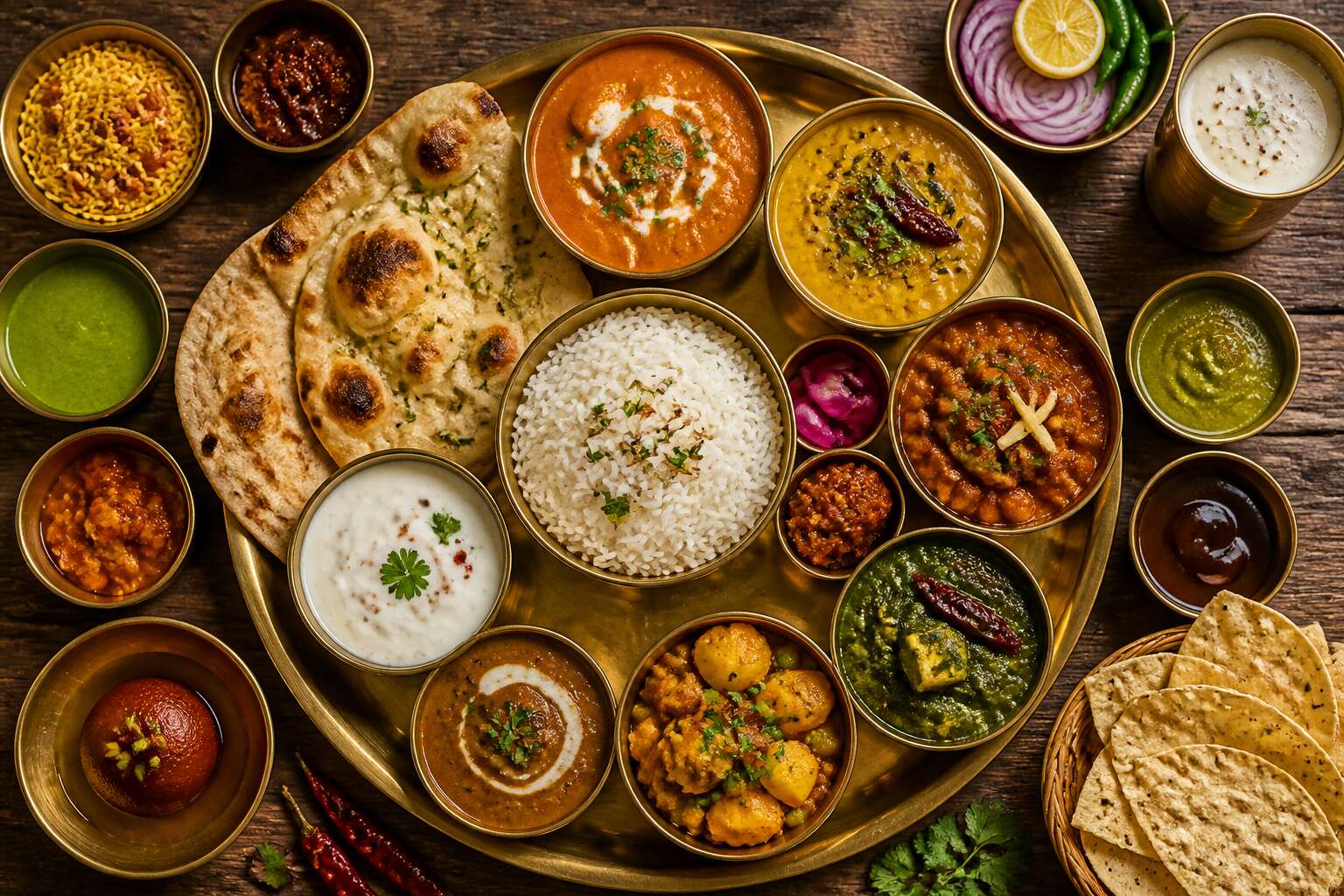
Essential Components of a Traditional Indian Meal Spread
Main Courses: Curries, Dals, and Dry Vegetables
On a South African dinner table, the main courses of an Indian meal spread carry the meal. A proper indian food table relies on more than one dish. Curries bring the moisture, whether tomato based or coconut based. Dals add protein and comfort. Dry vegetables, often called sabzi, offer texture and a break from the gravy.
Each component needs a counterpart:
- Rich curries need something mild to offset them
- Dals work as both a side and a sauce
- Dry vegetables hold their shape and flavour
I have watched many dinners fail because one dish overpowered the rest. The balance between these three keeps the spread functional and satisfying.
Bread Basket: Naan, Roti, Paratha, and More
Most South African homes know the value of fresh bread. On an indian food table, bread acts as the primary utensil. It scoops curry, drags through dal, and mops up sauce. Naan is soft and leavened! Roti stays thin and pliable. Paratha offers flaky layers, sometimes stuffed with spiced potato.
These breads balance the heavier dishes. They cool the palate between bites. They provide texture where gravies dominate. In my experience, a bread basket determines satisfaction.
A proper spread includes several options:
- Plain naan for sopping
- Whole wheat roti for daily meals
- Buttery paratha for special occasions
Without variety, the meal falls flat. This bread basket supports every other component.
Rice Preparations: Steamed, Biryani, and Pulao
Steamed rice arrives simply, each grain separate and waiting. It does not compete with the curry; it absorbs the sauce and tempers the spice. On an indian food table, rice provides the counterweight to heavier dishes, especially when bread has already played its part. I prefer a modest mound of plain basmati to let the dal shine.
Biryani and pulao elevate the grain into a meal of their own. Pulao keeps things gentle, with whole spices and vegetables folded through. Biryani layers marinated meat or vegetables with saffron and fried onions, then steams under a sealed lid. The difference matters:
- Pulao relies on even cooking
- Biryani builds complexity through layering
A festive spread often includes one. That rice dish becomes the centerpiece, while steamed rice remains the quiet necessary partner.
Accompaniments: Chutneys, Pickles, and Raita
An indian food table always includes those small bowls. Chutneys bring freshness. Pickles deliver a fermented punch. Raita cools the heat. These three work as a system. A spoon of coriander chutney lightens a heavy dal. A sliver of lime pickle forces attention. Raita, thick with cucumber or boondi, provides immediate relief.
In South Africa, we love spice but need contrast. That is why the lineup often looks like this:
- Mint or coriander chutney for herbaceous lightness
- Oil-soaked mango or lime pickle for sharp depth
- Cucumber or boondi raita for cooling balance
On any spread, these dishes complete the main courses. They transform plain rice and bread into a full experience. When I set my own indian food table, I ensure every bowl has a clear role. No random extras! Just the essentials.
Salads and Fresh Herbs for Balancing Flavors
The indian food table in South Africa leans heavy on heat, so I always build the salad to fight it. Kachumber, a mix of onion, tomato, cucumber and lemon, sits quietly beside the curries. It is a counterweight, not a garnish.
Fresh herbs work the same way. Coriander and mint bring green sharpness that cuts through oil and spice. Curry leaves, fried until brittle, add an earthy bitterness. Thin onion rings do the essential work.
- Kachumber with lemon and salt
- Fried curry leaves
- Fresh coriander and mint sprigs
- Thin onion rings
Curated Table Setting and Decor Ideas
Choosing Dinnerware: Thali Plates, Bowls, and Serving Trays
The thali, a circular platter that holds an entire meal, is the centerpiece of the indian food table. Its design influences how diners experience the array of flavors, so selecting the right material matters. Stainless steel offers durability and heat retention, while brass or copper adds a ceremonial weight. Each bowl, or katori, should nestle comfortably within the rim, allowing for easy reaching.
Consider the visual rhythm of the spread. A curated indian food table relies on contrast, so pair matte ceramic with polished metal. Serve chutneys in small brass cups and keep flatbreads stacked on a lined basket.
– Choose round trays for communal dining.
– Select bowls with wide mouths for easy dipping.
– Use rimmed plates to contain gravies.
The arrangement should feel abundant yet ordered, guiding the eye from one dish to the next.
Color Palettes and Textiles: Linens, Runners, and Napkins
An indian food table thrives on visual warmth. Fabric choices matter as much as the dishes. Opt for cotton napkins with subtle patterns. They hold up to heavy use. Linen runners in terracotta or turmeric shades define the spread. Deep maroon placemats add depth. Mixing textures creates contrast.
Use a runner that matches the dominant spice tone. For a quick guide:
- Saffron yellow for festive feasts.
- Earthy brown for rustic meals.
- Pale green for light lunches.
Fold napkins into simple rectangles. Tuck a fresh coriander sprig under each fold. This adds a living element without clutter. A well dressed table makes every curry feel intentional. The indian food table becomes an invitation to linger.
Centerpiece Inspirations: Flowers, Brass Lamps, and Rangoli
Nobody ever lost an appetite because the marigolds clashed with the chutney. Yet a bare center makes even the richest curry feel like an afterthought. I have watched many a dinner party limp along until a brass lamp appeared. The heart of an indian food table deserves more than a lonely salt cellar.
Flowers handle the conversation. Marigolds, jasmine, and tuberose in brass bowls add fragrance without shouting over the food. Brass lamps, or diyas, soften the lighting and make paneer look golden. Rangoli, drawn with rice flour or crushed petals, gives guests a reason to pause between bites.
A typical indian food table setup features:
- A brass lamp placed near the serving bowls, never directly above food.
- Flower petals scattered as a border around the thali placements.
- Rangoli kept clear of the eating zone, because nobody wants turmeric dust in their raita.
Keep it simple. The food leads the evening. The centerpiece just keeps the conversation honest.
Seating Arrangements for Large Gatherings
Hosting forty guests for a South African summer evening is no small feat! The indian food table is the main feature, so every chair must face it with purpose. I have learned that a long rectangular layout works best when you expect mingling, while round tables force casual conversation. For larger groups, assign stations rather than fixed seats.
Here is what I keep in mind:
- Place the beverage station away from the food queue to avoid bottlenecks.
- Arrange benches for younger guests and chairs for elders.
- Leave a clear lane for refills and dirty plate collection.
The decor should guide movement without blocking appetites. A low runner down the centre keeps sightlines open, and lanterns at chest height add warmth without stealing space. Every seat gets a view of the serving dishes, because nobody wants to stand to see the biryani.
Eco-Friendly and Traditional Serving Utensils
A brass ladle from my grandmother still holds its sheen after forty years of curries. That kind of longevity is rare on today’s indian food table, where disposables often dominate. Traditional serving utensils are making a quiet comeback, and I am all for it.
I reach for hammered copper tumblers and wooden spoons because they handle heat differently. Dal stays warm longer, and raita remains pleasantly cool in a clay pot. For a special feast, I line the table with banana leaves. Recyclable palm leaf plates work just as well for weekly dinners, and they compost easily afterwards.
What I keep within arm’s reach has shifted over time:
- A brass ladle for each curry.
- A wooden spatula for rice.
- Copper tumblers for water.
- A clay pot for pickles.
No plastic in sight, and the table feels more alive because of it!
Regional Variations in Indian Dining Arrangements
North Indian Table Traditions: Rich Gravies and Bread-Focused Meals
North India sets its table around bread. The indian food table here focuses on rich gravies, paneer preparations, and slow cooked dals, all designed for tearing and dipping. Rotis and naans arrive in stacks, while central bowls of thick curry sit within easy reach. The arrangement is deliberate.
- Gravies are dense and buttery, not watery
- Breads are replenished throughout the meal
- Pickles and raw onions serve as palate cleansers
In this tradition, the indian food table encourages communal interaction. Diners use pieces of bread instead of spoons, and the meal is eaten in a shared, rhythmic way. It is an intimate and practical setup, built around the hand, the bread, and the sauce.
South Indian Banana Leaf Presentation
Down south, the indian food table swaps ceramic for a freshly washed banana leaf. The leaf is not merely a plate; it is a blueprint. Each item has a designated spot, from the salt at the top left to the sweet pachadi at the bottom right.
You eat with your right hand, mixing rice into the sambar and curry. The leaf’s edges hold the chutneys, while the centre bears the hot rice. This arrangement is efficient, but it also signals respect for the meal.
- Rice sits in the middle, waiting for ghee.
- Lentils and vegetables circle the centre.
- Sweet and sour finishes anchor the corners.
When the meal ends, the leaf folds towards you as a sign of satisfaction. The setup here is a sensory checklist, not a buffet.
West Indian Thali Style: Gujarati and Rajasthani Spreads
In the West, the thali is a small, circular universe. The brass rim holds a constellation of flavors, each in its own tiny bowl, a katori. Statisticians note that a traditional Gujarati thali can feature over a dozen distinct preparations, a number that changes with the seasons and the family’s pantry. This is not a single plate but a rotating stage where sweet, sour, salty, and spicy all demand equal attention. I am convinced the arrangement is a lesson in balance, where the shrikhand cools the palate just as the kadhi warms the soul.
The meal proceeds in a prescribed order, often starting with a pinch of salt and a wedge of lemon to activate the digestive fire. Rice is served with the dal, while the puris, crisp and puffed, are meant for the drier vegetable stir-fries. A Rajasthani spread, more robust and fiery, relies on dried lentils and gram flour to create a hardy feast suited to the arid land. The indian food table becomes a map of regional resourcefulness, each thali a story of survival and celebration.
The components of a West Indian thali are numerous and varied:
– A bowl of tempered dal or kadhi.
– Dry vegetable preparations like undhiyu or gatte ki sabzi.
– A sweet dish, often made from milk and sugar.
– Salted snacks such as farsan or papad.
– A fresh salad of grated vegetables and lemon.
East Indian Dining: Fish, Rice, and Mustard Oil Pairings
East Indian dining shifts the indian food table toward fish, rice, and the assertive bite of mustard oil. In Bengal and Odisha, the meal opens with shukto, a bitter vegetable medley meant to awaken the stomach. Fish follows, either steamed in a banana leaf or simmered in a pungent mustard paste.
I have found the sequence matters as much as the components. Rice is served first with ghee, then dal, then the fish course. Each is eaten separately, never blended. The table offers:
– Steamed rice, often a local aromatic variety.
– A fish curry anchored by mustard oil.
– A dal with seasonal vegetables.
– A tart chutney of raw mango.
– Mishti doi, a caramelized yogurt, to close.
Mustard oil pervades the entire spread, giving it a sharp warmth. Unlike the katori-laden thalis of the West, East Indian meals often arrive on a single steel or bell metal plate, with courses added in succession. The indian food table becomes a sequence of tastes that unfolds course by course.
Street Food Inspired Table Settings for Casual Gatherings
Street food carts in Delhi and Mumbai serve more than ten million snacks daily, each with its own choreography. When you translate that chaos to a casual gathering, the indian food table sheds its formal thali structure entirely. For a street food inspired spread, swap brass bowls for steel baskets lined with paper, and let guests assemble their own plates.
- Papdi with spiced yogurt and tamarind chutney
- Bhel puri tossed with sev and pomegranate
- Pani puri with chilled flavored water
- Aloo tikki with mint chutney
Forget seating rows. Use low stools and wooden crates as tables. In South African homes, this style suits backyard braais and lazy Sundays. The indian food table becomes a self service counter where everyone eats with their hands, balancing paper plates on knees.
Serving Order and Dining Etiquette
Sequence of Courses: From Starters to Desserts
The Indian food table operates on a logic all its own, one that can bewilder the uninitiated. You arrange the dishes, but the serving order defies the Western march from appetizer to dessert. The true sequence is dictated by your bread and rice, which act as edible cutlery.
In practice, the meal begins with the starches. You tear a piece of naan or scoop rice, then move to the gravies and dals to find a partner for that bite. A quick cycle of curry, chutney, and pickle follows. This is not a free-for-all; it is a rhythm where each element gets its time.
The final course, sweets, appears in one of two ways. It is either the grand finale on a clean plate or it arrives alongside the meal in a surprising twist.
– For celebratory tables, the dessert is a separate act, served after the savories are cleared.
– In regional homes, a bite of something sweet is taken mid-meal to cool the palate.
– Digestion aids like fennel or paan often close the formal sequence.
This back and forth is the heart of the indian food table experience. It prioritizes balance and personal preference over rigid service rules. By the end, your plate tells the story of the meal, a layered timeline of vegetables, bread, and rice.
The Art of Serving with Right Hands and Family-Style Bowls
The right hand is the architect of the indian food table. It builds each bite, tearing bread or folding rice with a precision that cutlery cannot match. The left hand remains in reserve, a quiet guardian for water or the edge of a bowl. This practice is not mere tradition; it is a method that deepens the connection to the food.
The aesthetic of the indian food table is collaborative by design. Large bowls sit at the center, inviting everyone to reach in and serve themselves. You take a portion of dal, a piece of fish, and some rice, creating your own balance. This family style serving builds a rhythm where the meal feels like a shared performance rather than a solo assignment.
In many South African Indian homes, this sacred act begins with a small prayer of thanks. The serving order often follows the eldest first, a gesture of respect that anchors the gathering.
– Always use the right hand for eating and serving.
– The left hand is reserved for passing dishes and pouring water.
– Wait for the host to begin before the first bite.
– Serve others before filling your own plate.
The chaos of reaching, passing, and sharing is the heart of the meal. A guest who hesitates misses the point. The indian food table rewards those who dive in, who let the gravy stain their fingers, and who understand that a shared bowl tastes sweeter than a plated course.
Understanding Spice Levels and Customizing Portions
In a South African Indian home, the order of serving follows a logic that newcomers often miss. The mild dishes appear first, allowing the table to settle. Then come the fiery curries, placed within reach but never forced on anyone. This sequencing is part of the indian food table’s quiet intelligence.
Spice levels are a conversation, not a test. A guest who asks for a milder portion receives a spoon of yoghurt or a wedge of lemon. Customizing portions is expected. You take a little rice, a smaller scoop of the vindaloo, and more of the dhal if that suits your palate.
- Start with a small portion of each dish. Ask for more if needed.
- Mix spice into rice or bread rather than eating it alone.
- Balance a hot curry with raita or a sweet chutney.
The host reads the room. A guest who reaches for water after the first bite receives a gentle smile. The table adjusts, and the meal continues.
Refill Rituals and Guest Hospitality Norms
Few rituals rival the precision of a South African Indian refill. The indian food table opens with mild dishes, then bold curries appear as the meal settles. Refill etiquette is subtle. A guest’s empty bowl prompts an immediate offer, often before the guest can ask.
Typical refill rituals include:
- Rotis delivered straight from the pan
- Rice spooned into the bowl with a gentle tap
- Raita refreshed without a word
Guests show respect by accepting the first offer. Declining the second is acceptable. The host reads every gesture, and the meal flows without interruption.
Pairing Beverages and Accompaniments
Cooling Drinks: Lassi, Buttermilk, and Chaas
A cold glass of lassi can reduce the burn of a spicy curry by up to 40 percent, which explains its constant presence on the indian food table. I always notice how a salted lassi changes the entire meal! Buttermilk, also called chaas, is thinner and often spiced, while lassi is richer and sometimes sweet.
Pairing these drinks depends on the main course. A sweet lassi works with mild paneer dishes. Spiced buttermilk handles heavy dal. For biryani, plain chaas with roasted cumin is a reliable choice. Consider these combinations:
- Sweet lassi with cardamom rice puddings
- Salted buttermilk with lentil curries
- Mint chaas with tandoori meats
Each drink brings a distinct texture and flavor. The right match keeps the meal balanced, allowing guests to enjoy every dish without overwhelming their senses.
Warm Beverages: Masala Chai and Filter Coffee
The quiet comfort of an indian food table often extends beyond the meal itself. After the spices have danced on the tongue, a warm cup of masala chai offers a grounding presence. The brew, infused with cardamom, ginger, and cloves, acts as a digestive aid while its sweetness provides a counterpoint to the lingering heat. I find this moment of pause to be as important as the feast, a time for conversation to settle and breaths to deepen. It is a voluntary slowdown, a ritual that transforms a quick dinner into a shared experience.
In the southern regions, the filter coffee holds a similar place of honor. It arrives with a frothy top, served in a steel tumbler and davara. The ritual of pouring it back and forth to cool and aerate the brew is a familiar sight. This strong, chicory-laced coffee offers a robust conclusion to a meal of dosas or idlis. If your gathering stretches into the evening, consider how these warm beverages shift the dynamic of the table.
A simple pairing guide can help you decide:
– Masala chai with samosas or vegetable cutlets.
– Filter coffee with coconut-based sweets or banana fritters.
– A light, leaf-based tea after a heavy, creamy korma.
These drinks do more than wrap up the evening. They represent a shift from the communal act of eating to a more personal moment of reflection. For many, the meal is not complete without that final, warming sip. The choice between chai and coffee often speaks to regional heritage, and offering both pays tribute to the diverse palate of your guests. The unfiltered coffee, with its rich sediment, is a particular favorite of mine, grounding the entire experience in tradition.
Bread and Rice Pairings for Each Curry Type
Pairing bread and rice to each curry transforms an indian food table. A dense, tomato-heavy paneer makhani demands a soft naan to absorb every fold of the sauce, while a light fish curry calls for steamed rice so the mustard oil can speak.
Drier preparations like bhindi masala or aloo gobi fare better with a flaky paratha, which adds texture without overshadowing the vegetables. Match the heft of the grain to the weight of the gravy. A thin, soupy dal benefits from jeera rice.
These dependable matches guide most hosts:
- Rich, creamy kormas pair with naan or roti, rarely rice, as bread carries the sauce more effectively.
- Tangy, tamarind-based curries suit steamed rice, which balances acidity without competing.
- Dry vegetables and kebabs work well with paratha or plain basmati.
Beverages follow the same logic on the indian food table. Cool buttermilk alongside a spicy chettinad chicken curry keeps the heat from overstaying, just as naan softens the assault of a fiery rogan josh.
Papad, Pickles, and Onion Salad as Crunchy Complements
No single element on an indian food table works in isolation. The cooling effect of a salted buttermilk, or chaas, serves as the necessary counterbalance to a heavy, oil-rich curry. A robust South African palate may appreciate a hint of chilli, but the fermented tang of the drink resets the taste buds for the following bite. This interplay of temperature and spice defines the entire meal.
Crunchy accompaniments deliver the textural jolt that sauces and gravies cannot. They are not mere decoration. Respect the role of each component by considering how it interacts with the main dishes:
– Papad, which provides a crisp, salty snap, best enjoyed broken over hot rice or eaten on the side to contrast with soft curries.
– Pickles, which offer an intense, sharp punch, used sparingly to stimulate appetite and cut through richness.
– Onion salad, which adds a fresh, sharp, and slightly sweet element, cooling the palate and providing a raw counterpoint to cooked spices.
The choice of beverage must mirror the intensity of the food. For a fiery, slow-cooked mutton curry, a tall glass of buttermilk is the preferred companion, as its creamy texture soothes the heat. For lighter dishes, or when beer is served, a lime soda with its tart edge performs a similar function. The true measure of any indian food table is how well these peripheral elements, the quiet pops of pickle and the sips of a cold drink, integrate to create a complete sensory experience.
Sweet Endings: Traditional Desserts that Complete the Table
The final act of any indian food table demands a quiet reckoning with sweetness. A warm, saffron-infused kheer offers a fragile calm after the harshness of spice. For the South African palate, this is where the meal reveals its true intent.
Pairing dessert with beverage requires attention to texture. A dense, syrup-soaked gulab jamun calls for unsweetened black tea. The bitterness cuts the syrup, much as pickle tartness cuts a rich curry.
- Shrikhand with a glass of chilled milk
- Ras malai with a small shot of cardamom-infused water
- Gajar ka halwa with a splash of cold buttermilk
These combinations close the indian food table without ceremony. The sweetness lingers, but the memory of a balanced meal holds longer than any single flavour.
Hosting Tips for a Memorable Indian Feast
Planning a Balanced Menu with Vegetarian and Non-Vegetarian Options
Hosting a memorable feast revolves around the indian food table, that colorful spread of dishes. I’ve found that planning a balanced menu clears away stress. Vegetarian dishes like chana masala and palak paneer sit beautifully beside slow-cooked lamb rogan josh.
- Choose one protein-packed dal.
- Select two vegetable curries.
- Add a light raita or cucumber salad.
- Include a neutral bread like roti.
In South Africa, guests appreciate this variety. The table becomes a place for connection, not confusion.
Preparing Ahead: Make-Ahead Curries and Doughs
A well stocked freezer is the quiet hero of any celebration. The true art of hosting lies in the calm before the first guest arrives. Curries like dal makhani or a rich butter chicken actually deepen in flavour overnight. I always prepare my gravies two days ahead, allowing the spices to meld into a cohesive whole.
The dough for naan and roti is equally forgiving. A rested dough rolls out thinner and bakes with a better puff. Mix it the morning of the event, and cover it with a damp cloth.
For efficient planning, I keep a mental checklist:
– Choose one curry that freezes exceptionally well.
– Prepare the raita base, but add the cucumber just before serving.
– Roll and freeze paratha discs, separated by parchment paper.
– Grind your spice blends fresh for the day.
These small steps free you to enjoy the company. The indian food table then becomes a display of relaxed generosity, not a source of frantic last minute work. When the laughter flows as freely as the chai, you know the preparation was worth every minute.
Setting Up a DIY Thali Station for Guests
Eighty percent of a feast’s success is its presentation, and the true drama unfolds when guests assemble their own plates. A DIY thali station transforms the conventional buffet into an interactive theatre of flavours. Instead of a single laden plate, provide the architecture of a meal and let each person curate their own balance of textures and heat.
The key to this station lies in logical grouping. Set out the warm bowls, then the dry snacks, and finally the cooling elements. For structural integrity, guide your guests with this sequence:
1. Place the central rice or bread base.
2. Add one primary curry, allowing juices to pool.
3. Layer a dry vegetable for textural contrast.
4. Finish with chutneys and a fresh salad for piquancy.
This method honours the principle of succession. The physical layout of the counter dictates the rhythm of the meal, slowing down the rush and encouraging mindful choices. The indian food table becomes a canvas for individual preference, celebrating the diversity of palates without compromising the integrity of the dishes themselves.
For the host, this approach is surprisingly serene. You orchestrate the components, but the guests perform the final act of assembly. The indian food table, thus arranged, becomes a dialogue between the cook’s craft and the diner’s desire, a silent partnership that ensures every person finds exactly the bite they were craving.
Managing Spice Preferences and Dietary Restrictions
The indian food table rewards a host who keeps spice adjustable. I always maintain a gentle baseline curry, then serve extra heat on the side as a paste or chopped green chilies. This way, no one sweats through their starter.
Dietary boundaries need the same respect. Ask guests ahead of time about allergies and preferences, then label dishes with small cards. For the indian food table, offer a vegan dal or a paneer alternative. You can even set up a separate serving spoon for each pot.
- Keep yogurt raita and sliced cucumbers near the spicy dishes.
- Place mild coconut curry at one end, fiery vindaloo at the other.
- Use separate ladles for meat and plant based curries.
That layout prevents cross contamination and lets guests navigate without interrogation. The result is a feast where everyone feels seen, and the only surprise is a clean plate.
Creating an Inviting Atmosphere with Music and Lighting
In South African homes, the indian food table becomes the heart of celebration, but without the right lighting, even the finest curry loses its glow. I have learned that warm, dim bulbs create intimacy, while candles placed at eye level add a gentle flicker to the room.
Music should stay in the background, never competing with conversation. Consider a playlist of santoor, tabla, or soft classical raga that loops quietly. A simple list of lighting ideas helps:
- Use brass lamps for a traditional feel
- String fairy lights along the serving edge
- Place a small lantern near the bread basket
When the atmosphere invites lingering, guests relax and share more freely. The indian food table then works its magic naturally.
Cleanup Strategies for Multi-Dish Dinners
Hosting a multi-dish feast requires careful planning. I have learned that the indian food table functions best when you consider the cleanup first. Designate one trolley for dirty thalis and another for fresh serving spoons. This separation prevents cross-traffic chaos during service.
Keep a bucket of soapy water near the kitchen door. Submerge utensils immediately. Curry residue hardens fast. A few drops of vinegar cut through oil. For brass and copper, use lemon salt. Assign a friend to wipe surfaces between courses. This keeps the table presentable without pausing the meal.
- Stack bowls by size before washing
- Line the sink with newspaper for bones and scraps
- Soak heavy pots while guests enjoy dessert
I also suggest a dry run of the serving layout. Knowing where each dish rests avoids mid-dinner fumbling. The indian food table then functions as intended.
0 Comments